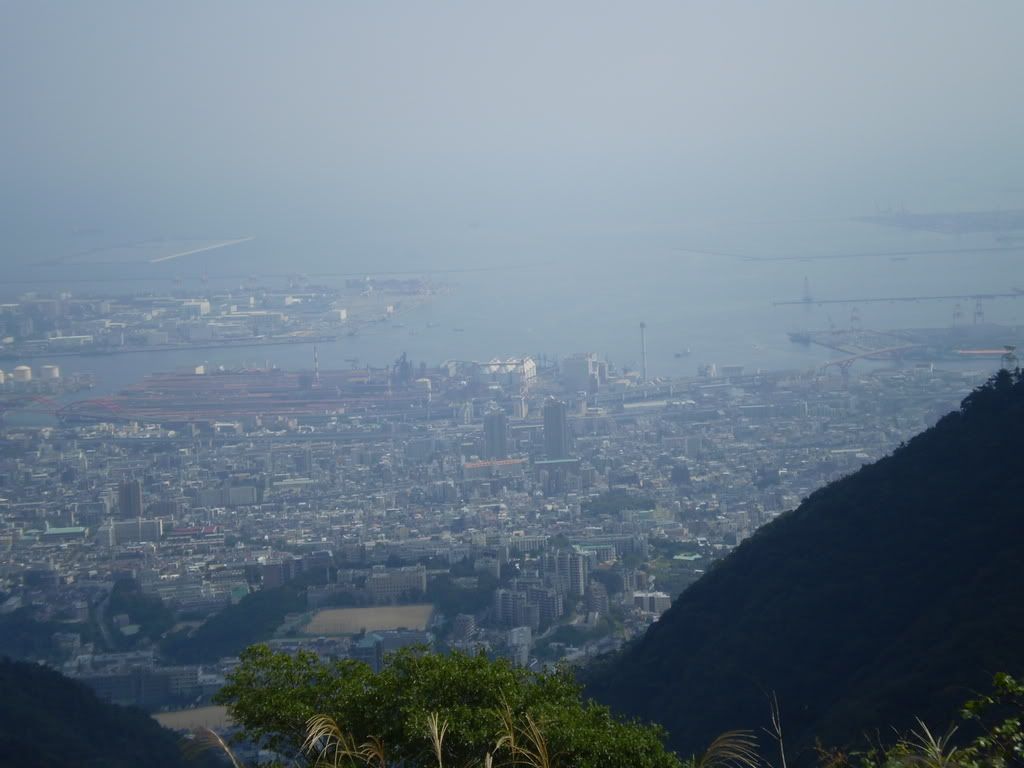
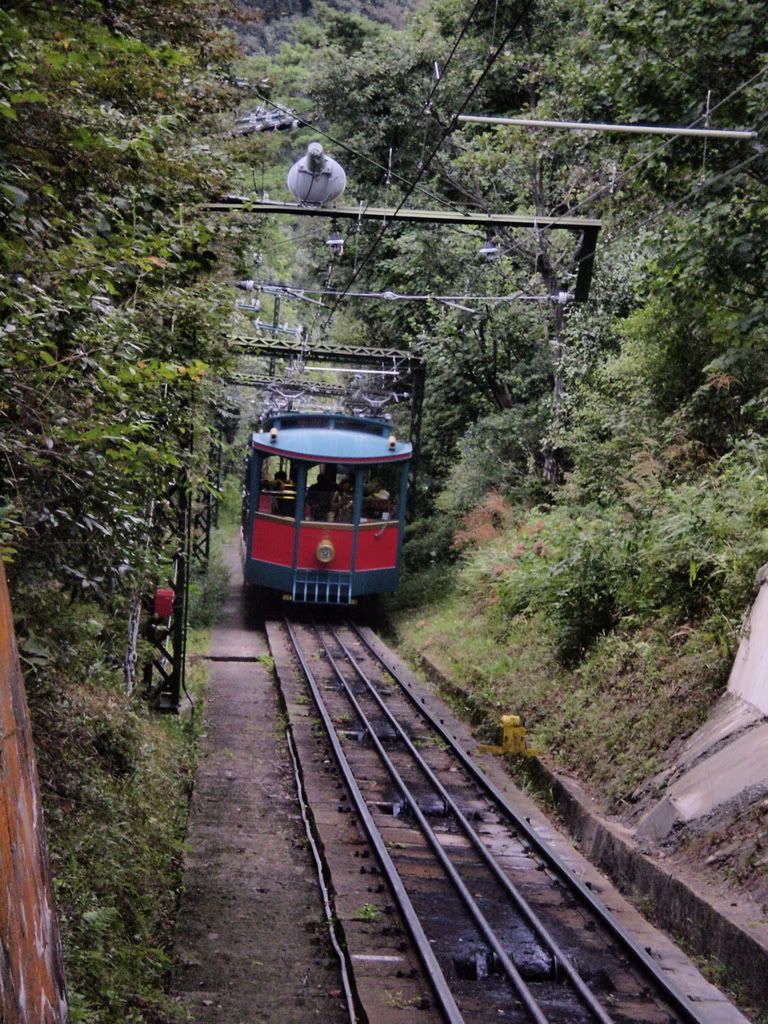
I wish I could tell you that from now on we will endeavour to update this blog more frequently, but that's not a promise we feel we can keep. Although we've been to quite a few interesting places over the past month or so--including Himeji (again), Osaka and Tokyo--today's entry concerns our travels to Kyoto.
Kyoto, apart from being famous for the eponymous Protocol to the international Framework Convention on Climate Change that the new Australian PM has promised his government will ratify, is (as most travel guides will tell you) the cultural heart of Japan. Go to Osaka or Tokyo and you will see one side of Japan--the side immortalised in the novels of William Gibson and which inspired the iconography of
Blade Runner; go to Kyoto, and you will see the side of Japan immortalised in
The Karate Kid movies (I know--none of them are set in Kyoto). For many centuries, Kyoto was actually the capital of Japan until the latter part of the 19th century. (Thanks,
Wikipedia.) The city was spared bombing by the United States during World War II because of its great beauty, so unlike many large Japanese cities it has retained many of its prewar buildings. (Thanks again.)
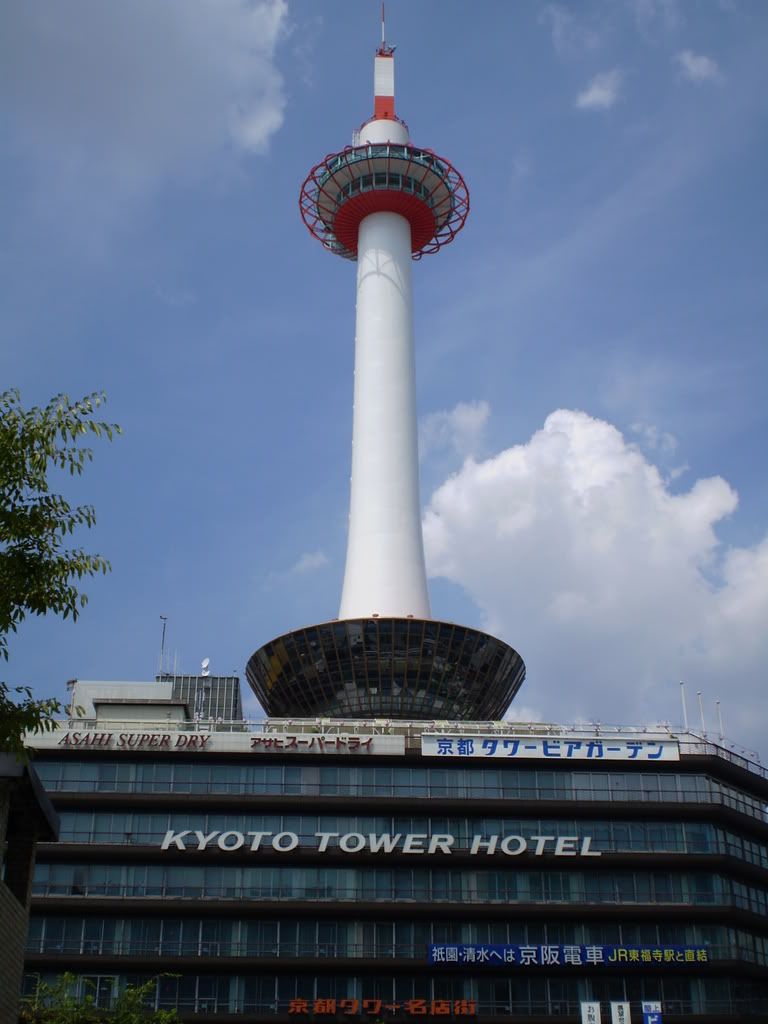
Click on the pictures below for slideshows, and click on the subtitles for further information about each temple/location.
Kyoto certainly is a beautiful city, except for its river, which runs along its eastern side. Have you ever seen
The Host? That's what the river reminded me of. A choking mess of reeds and weeds from which I kept expecting, as I looked upon it with some disquiet from a bridge, a giant mutant fish monster to spring. I'll never whinge about Perth's foreshore again!
The real attractions of Kyoto lie mostly on its periphery. During our two visits to Kyoto--one sometime at the end of August, the other in early November--we visited temples to the north (Kinka-kuji and Ryoanji), south (To-ji) and east (Ginkakuji, Honen-nin, and Nanzen-jin). To get to these locations we were unfortunately obliged to negotiate Kyoto's buses.
All I can say is, if you choose to board one of these vehicles, take a seat if there is one available. Even if it is one of those custom-deisgned-for-the-diminutive-Japanese-physique seats they usually place over the wheels, and you have to wrap your legs around your own head. You will still be more comfortable than standing and lurching to and fro--as if you were on an ocean liner that had crashed into an iceberg--while the bus takes corners at breakneck speed and incessantly pulls in at bus stops that can't be more than ten metres apart. That's if you're lucky. Most of the time you'll find yourself standing in the aisle in conditions resembling those aboard Australian container ships bound for Saudi Arabia. In Perth, there are regulations governing the maximum amount of people a bus is allowed to carry. Once the limit is reached, the bus driver cannot and does not pick up anyone else. In Kyoto, the prevailing wisdom seems to be that you should pack in as many people as is humanly possible. Oh--and I should mention that if you do decide to brave the buses, you can buy an all-day pass from Kyoto's ponderous train ststion--be warned, however, that it won't be accepted on buses going to and from the outer suburbs. (We discovered that the hard way.)
The temples, in any case, are well worth the trouble getting to them. Many of them look as if they have sprung to life out of fairytales, and they really brought home to us the sense that we weren't in Australia anymore. Kinkakuji's famous golden temple, which we visited on a day trip at the end of summer, has got to be one of the most photographed buildings in Japan. On the eastern side of the city lies the more serene but no less popular Ginkakuji, the "silver temple" which isn't actually silver. (Depending upon who you ask (we asked the rickshaw driver who took us there), it was so called either because it was going to be coated in silver but the job wasn't completed, it was covered in silver but the silver was stolen or removed, or the "silver" is the effect of moonbeams reflecting off the white sands surrounding the building.)
Toji's pagoda is the tallest in Japan, but even more striking are the giant buddhas housed in the lecture halls (in which visitors are unfortunately forbidden to take photos), and watching the locals stop to bow their heads or genuflect before the statutes gives those halls an almost "Catholic" ambience. The Zen temple Ryoanji is famous for its rock garden, which
consists of "15 rocks arranged on the surface of white pebbles in such a manner that visitors can see only 14 of them at once, no matter what angle the garden is viewed from." You achieve enlightenment, apparently, if you see the fifteenth rock. On the day we visited, it was too crowded to see more than three or four! But for us tourists, it would probably be a great place to meditate, if you're into that kind of thing.
The highlight of the two journeys to Kyoto for me was the Philosopher's Walk, which I had been looking forward to visiting since I read about it back in Australia. The Philosopher's Walk is a 2 kilometre path beside a canal lined with cherry trees, and is so named because it was the constitutional of the Japanese philosopher
Nishida Kitaro. We tackled it very early in the morning in order to avoid the crowds, and despite the cold, it really is the only way to appreciate it, I think. A testament to its popularity is the amount of cafes that line it--there is even
a cafe named in honour of the late astronomer Carl Sagan (where we would have stopped for coffee if it wasn't so overpriced). We did run into crowds eventually, but fortunately it was towards the end of the Walk and they were coming the other way.
I'm not sure when we'll return to Kyoto--but since it's part of the same conurbation as Osaka and Kobe, it's no great hassle to reach by train. (And you should see Kyoto's train station!)

 Day one in Tokyo: Matt hearts beer
 Mediterranean Harbour & American Waterfront
 Mysterious Island
 Mermaid Lagoon
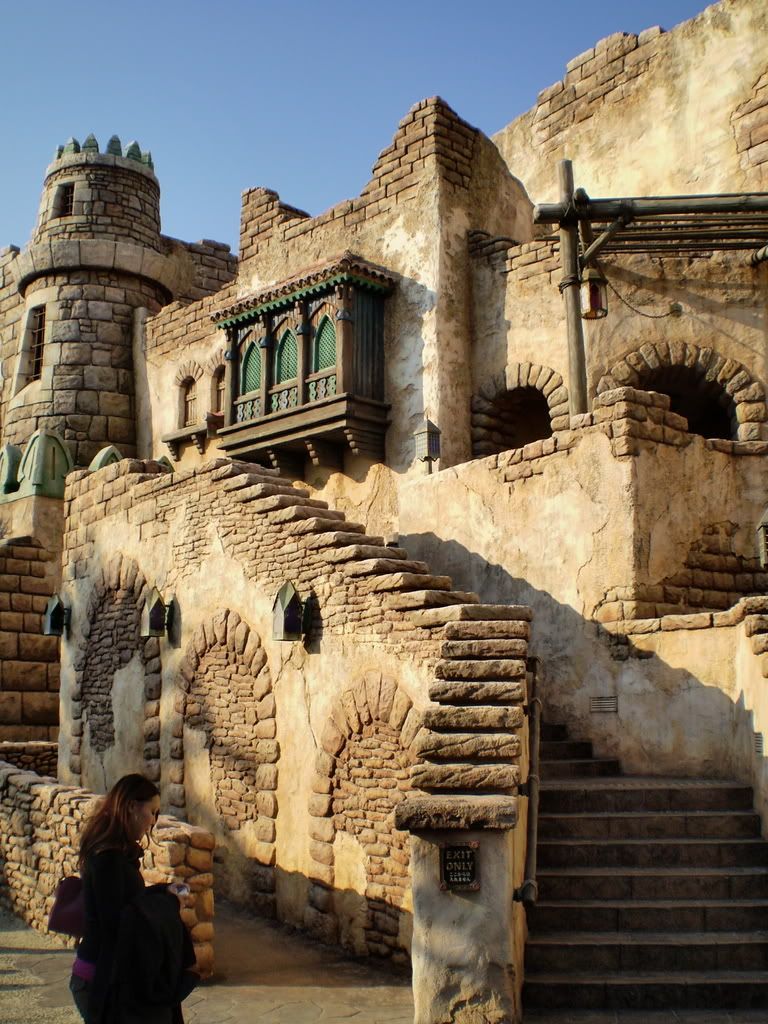 Arabian Coast
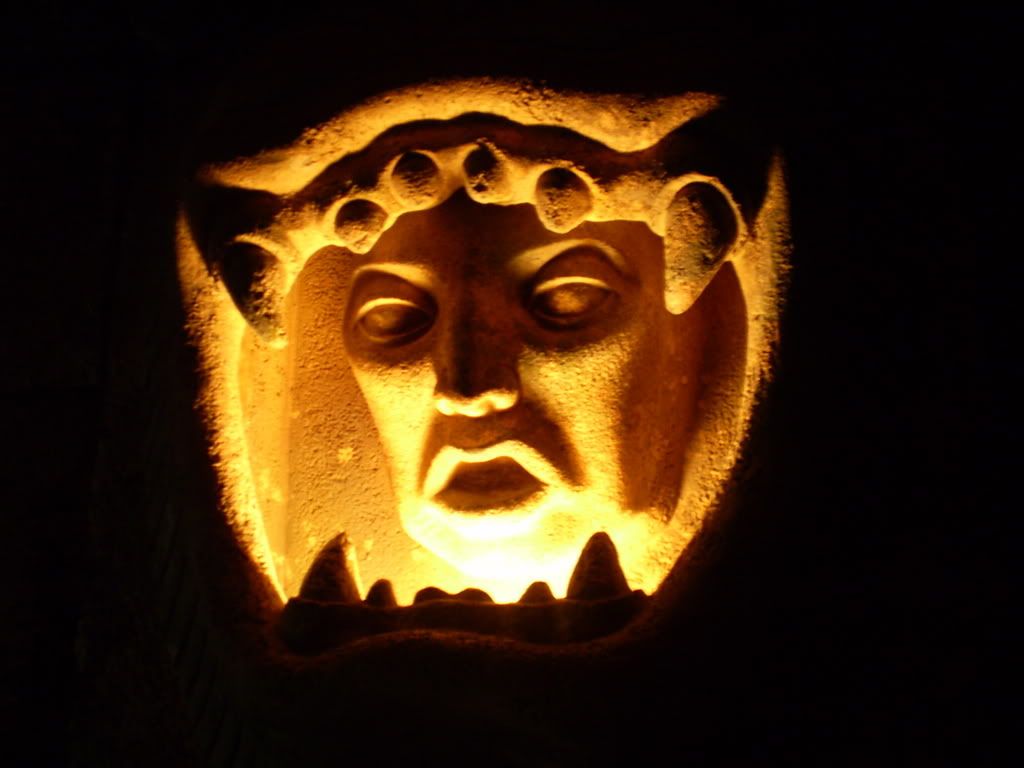 While the place just screams rampant commercialism, and everything is shiny and perfectly painted, it was incredibly easy to forget any niggling bleeding-heart/critical-thinking instincts and get caught up in the spectacle and excitement. The best bits were the Indiana Jones ride (in the "Lost River Delta" section of the park--click the image to the left to see the slideshow--where we had to wait 100 minutes in line), Journey to the Centre of the Earth ride (luckily we got a fast pass to this one earlier in the day and it only a 10 min wait), Raging Spirits roller coaster with its 360 degree turn, the Little Mermaid live show (which involved puppetry and a lot of suspended rhythmic gymnastics) and Aladdin’s Magic Lamp Theatre. Thankfully this last show came with a DS Nintendo style translator to allow us to understand the story, as well as allowing us to sport some obviously couture 3D glasses which brought the genie's magic to multi-dimensional life, not to mention the automated seats that gave us a surprising kick up the butt.
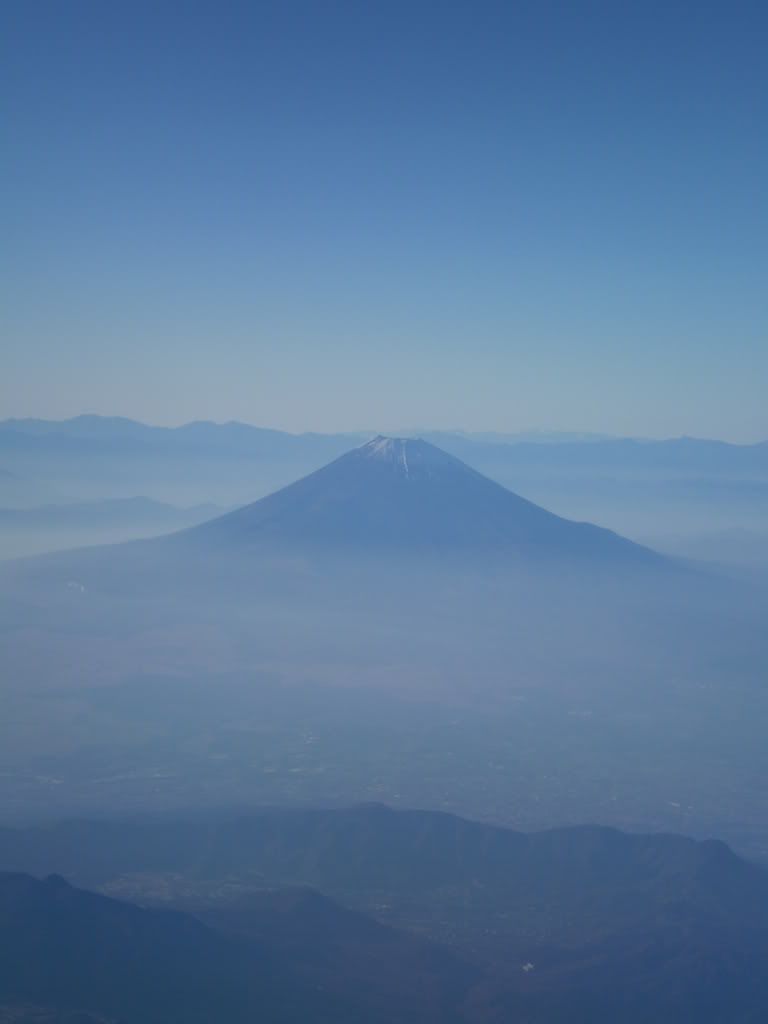 As you can tell, we had a fantastic long weekend, and we really appreciate Shibata-sensei's help in organising the trip. Matt's last day could have been better: evidently something he ate at Mister Donuts on Sunday morning--probably the frankfurt-in-pastry thing the clerk neglected to heat up--strenuously disagreed with him. Fortunately he made it home still bearing the contents of his stomach, but he tells me that it was touch-and-go on the flight from Tokyo to Osaka, where he was seated next to an old man who possessed a very vocal digestive system and whose red wine and beer nuts were repeating on him at the most inopportune of times. Still, it wasn't all bad news . . .
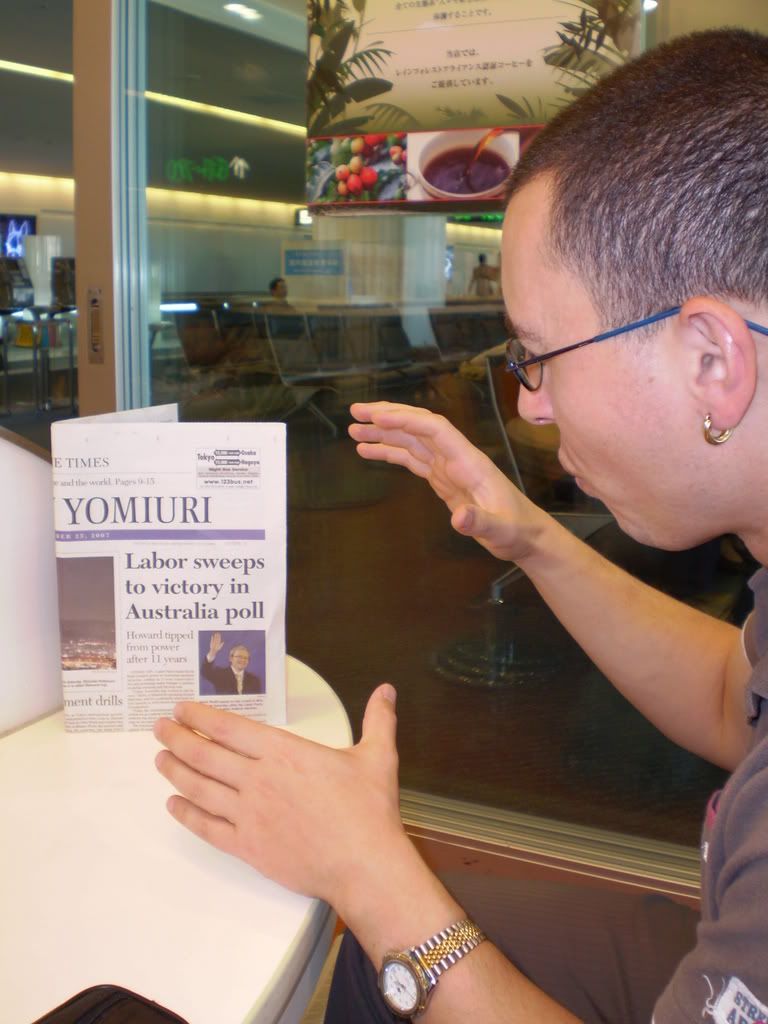 Matt hearts the election result