Friday, December 7, 2007

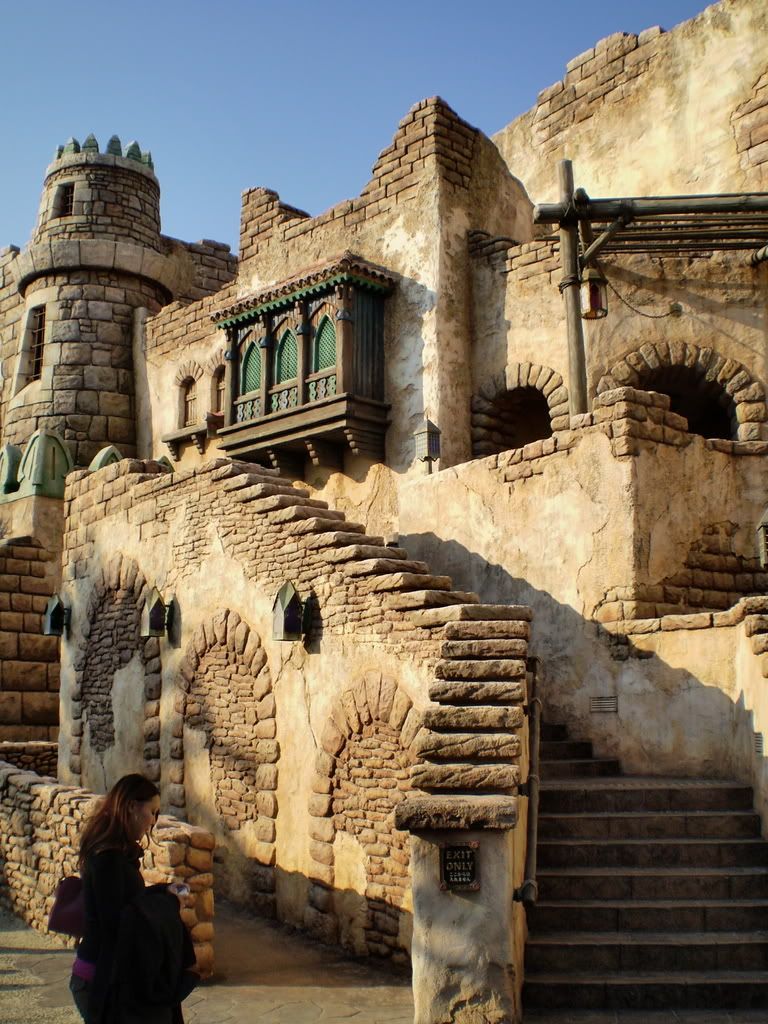
Tokyo Disney Sea

(Preface: You'll find that if you double-click most of the photos in this post, you'll be taken to a slideshow)

Day one in Tokyo: Matt hearts beer

Tokyo Disney Sea is cool! All my reservations, that a visit to the Disney franchise as an adult would mar precious childhood memories of delightful days spent exploring the original theme park in Los Angeles with my brother and parents, were immediately dissipated upon our entry. Once inside, we met with a shiny blue and gold globe that was dancing on water, and from that point on we were dancing on wonderment and pure childish enjoyment.

Mediterranean Harbour & American Waterfront

The whole attraction is called Tokyo Disney Resort and is made up of two theme parks, Tokyo Disney Sea (for adults) and Tokyo Disney Land (for kids), which are connected by a monorail that sports very cute Mickey silloutte shaped windows. However, separate tickets are needed for entry into each park, and we only had one day to play with, so we opted for TDS as some of the other ALTs we went with had already been to TDL.

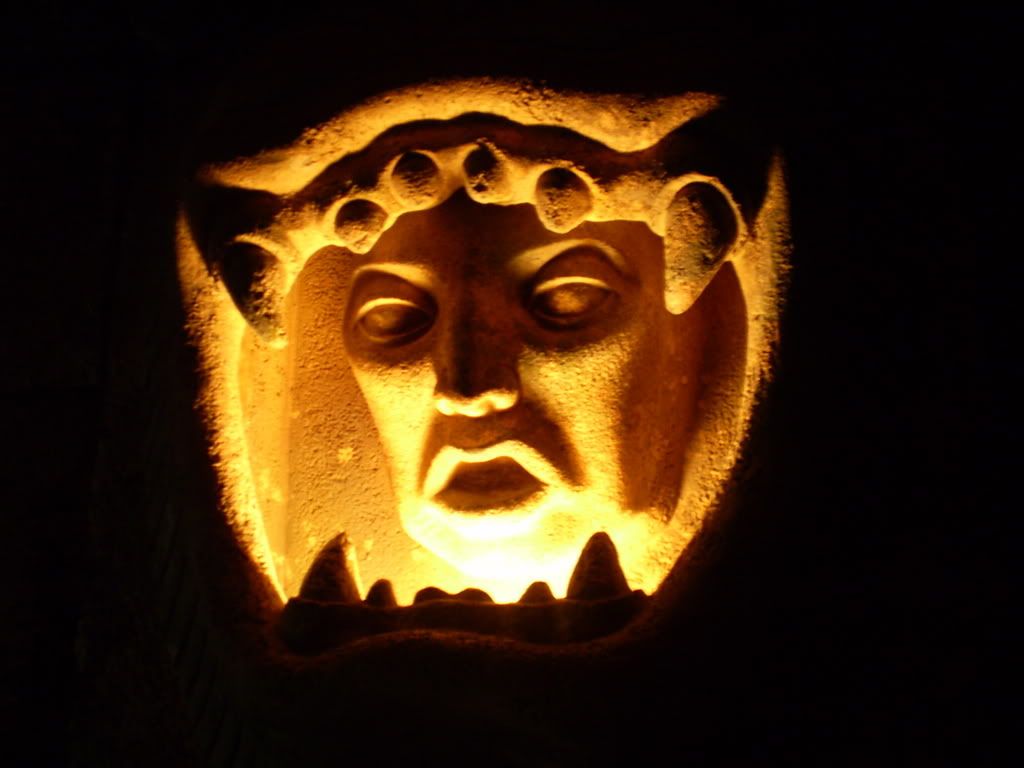
Mysterious Island


Mermaid Lagoon


Arabian Coast

While the place just screams rampant commercialism, and everything is shiny and perfectly painted, it was incredibly easy to forget any niggling bleeding-heart/critical-thinking instincts and get caught up in the spectacle and excitement. The best bits were the Indiana Jones ride (in the "Lost River Delta" section of the park--click the image to the left to see the slideshow--where we had to wait 100 minutes in line), Journey to the Centre of the Earth ride (luckily we got a fast pass to this one earlier in the day and it only a 10 min wait), Raging Spirits roller coaster with its 360 degree turn, the Little Mermaid live show (which involved puppetry and a lot of suspended rhythmic gymnastics) and Aladdin’s Magic Lamp Theatre. Thankfully this last show came with a DS Nintendo style translator to allow us to understand the story, as well as allowing us to sport some obviously couture 3D glasses which brought the genie's magic to multi-dimensional life, not to mention the automated seats that gave us a surprising kick up the butt.

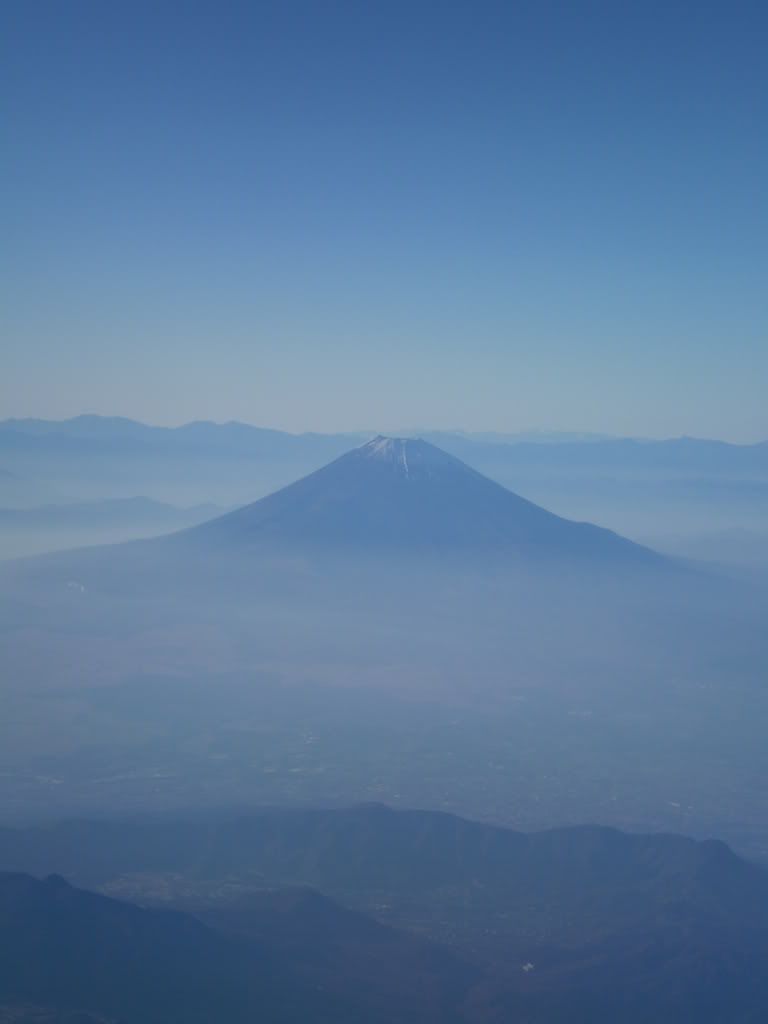
As you can tell, we had a fantastic long weekend, and we really appreciate Shibata-sensei's help in organising the trip. Matt's last day could have been better: evidently something he ate at Mister Donuts on Sunday morning--probably the frankfurt-in-pastry thing the clerk neglected to heat up--strenuously disagreed with him. Fortunately he made it home still bearing the contents of his stomach, but he tells me that it was touch-and-go on the flight from Tokyo to Osaka, where he was seated next to an old man who possessed a very vocal digestive system and whose red wine and beer nuts were repeating on him at the most inopportune of times. Still, it wasn't all bad news . . .

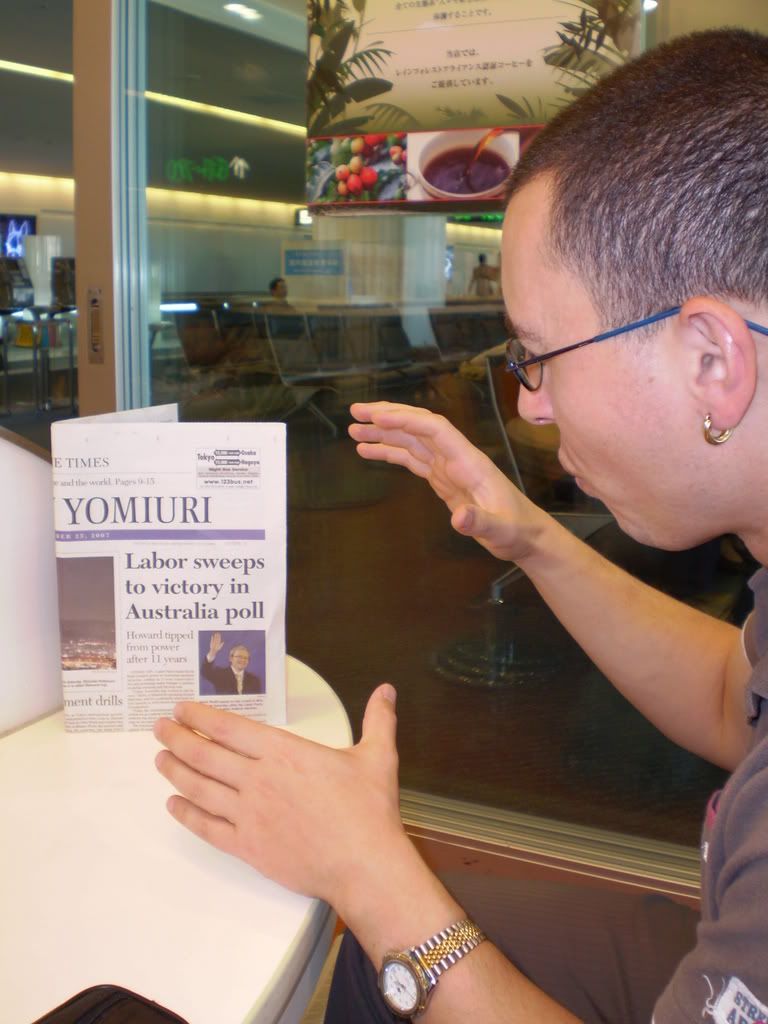
Matt hearts the election result


Thursday, December 6, 2007

Mt. Shosha, Himeji

About a week or two following our trip to Kyoto, we returned to Himeji. The occasion? An all-you-can-eat Thanksgiving dinner: ostensibly for American ALTs, though we managed to get ourselves invited anyway. Given that we had a day to kill, a few of us--namely Dan K, Goran, Amanda, Emma and myself--decided to meet at the JR station early(ish) in the morning and hike up Mt. Shosha.

(As with the previous post, click the images to see slideshows.)

Though I doubt it's a tidbit of information I'll be proud to relate to my grandkids in years to come, Mt. Shosha is famous for being one of the locations of the Tom Cruise vehicle The Last Samurai (which was mainly filmed in New Zealand). At its summit lies Engyo-ji Temple, which in my view ranks alongside some of the temples of we saw in Kyoto in terms of its beauty, and has the added benefit of being situated at a reliable distance from downtown Himeji. It took us a little while--not to mention the aid of the bilingual Dan and a helpful local--to find the path leading up the mountain, and on the whole I'd have to declare it a little more difficult than Sumaura. (But no less enjoyable.) Fortunately, Emma and I are obliged to scale a mountain to get to our bus stop each day, so we were more than capable of handling this little hillock.


At the top of the mountain, and at the door of the Engyo-ji complex, we took advantage of a lookout. Himeji looks amazing from this vantage point, flanked by rolling green mountains, and with outlying hills rising like islands from the surrounding metropolis. This is the kind of view that makes hiking up a mountain--as opposed to taking the ropeway--all the more worthwhile. You feel as if you've earned it, somehow.


Engyo-ji itself is a massive complex, and the temple proper is a fair distance from the gates, but at this time of year (autumn) the hike is a reward in itself. The path leading from the gates to the temple buildings is lined with buddhas, and close to the gate there is a large temple bell which visitors are welcome to toll. (It is supposed to bring good luck.)The buildings themselves are impressive. Depending on which route you take from the gate, the massive main building appears before you very suddenly, over the crest of a hill. Behind the main temple are the lecture theatres, arranged around a wide courtyard. It was here, evidently, that the scenes from The Last Samurai were shot. (I was inspired thus to regale my fellow travellers with the curious beliefs of the Scientologists, which are summarised here.)
But IMHO the main attraction of Engyo-ji is the flora--chiefly the red momiji (maple), and I'm afraid that our photography can't really do justice to the combination of bright greens and yellows, and brilliant, sharp reds, that we saw there that day. (Even after Emma's great editing work.)
It's one of those things that you have to see for yourself.

Let's see . . . what else did we do that day? Well, after hiking back down the mountain (precariously), we made our way to an onsen (hot spring) in the CBD. Neither Emma and I had been to one before, and I was a little concerned that I would be denied entry because of my tattoo, but nobody seemed to mind. Goran and Dan showed me the ropes: the art of a good onsen, as I understand it, is to subject your body to extremes of heat and cold, and repeat this process until you're ready to be flayed alive and eaten. (That's if the sauna doesn't cook you first.) Then you take a dip in the hot spring briefly before fleeing the hungry locals.

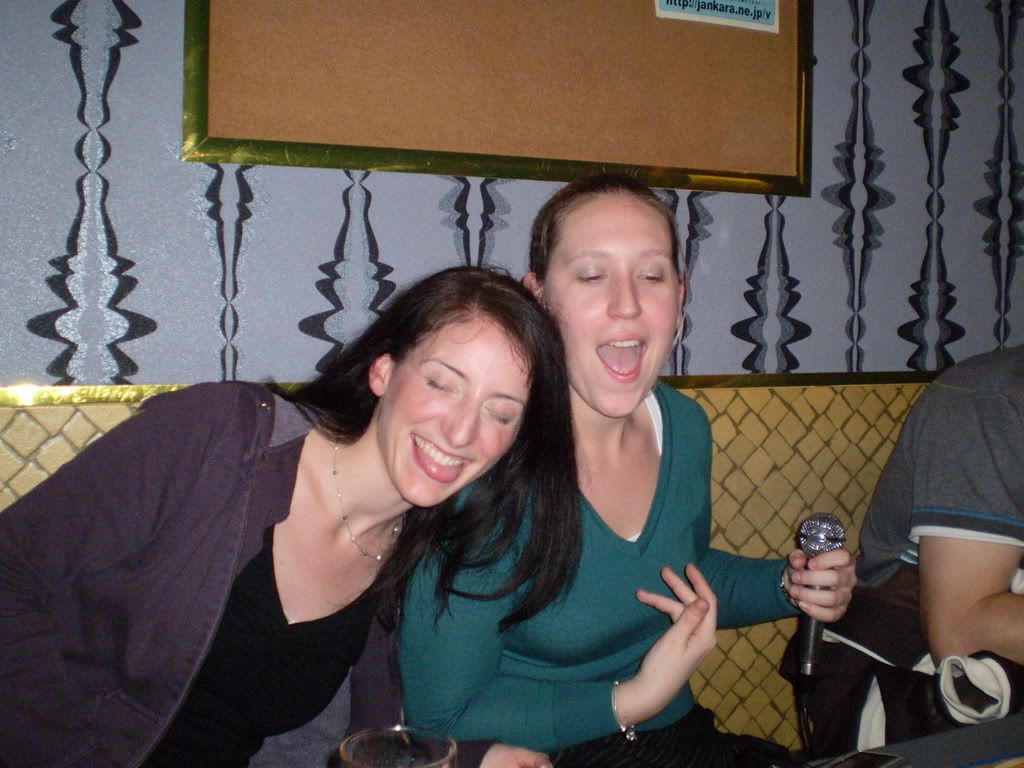
At the Thanksgiving the Australian table (with two Americans along for the ride) was the life of the party, naturally. Although the party was held at a restaurant the food was homestyle--though in a good way (go to Miss Mauds in Perth if you want to try it the bad way): mashed potatoes, chilli con carne, stuffing (mmm . . . stuffing) and turkey (of course). Dan and myself did ample justice to the all-you-can-eat terms of reference, downing six plates between us. Afterwards a group of us finished the evening at a karaoke bar--it is the law here, after all--in a raucous session truncated (to half an hour) by the fact that we all had trains to catch.

Saturday, December 1, 2007

Kyoto

I wish I could tell you that from now on we will endeavour to update this blog more frequently, but that's not a promise we feel we can keep. Although we've been to quite a few interesting places over the past month or so--including Himeji (again), Osaka and Tokyo--today's entry concerns our travels to Kyoto.

Kyoto, apart from being famous for the eponymous Protocol to the international Framework Convention on Climate Change that the new Australian PM has promised his government will ratify, is (as most travel guides will tell you) the cultural heart of Japan. Go to Osaka or Tokyo and you will see one side of Japan--the side immortalised in the novels of William Gibson and which inspired the iconography of Blade Runner; go to Kyoto, and you will see the side of Japan immortalised in The Karate Kid movies (I know--none of them are set in Kyoto). For many centuries, Kyoto was actually the capital of Japan until the latter part of the 19th century. (Thanks, Wikipedia.) The city was spared bombing by the United States during World War II because of its great beauty, so unlike many large Japanese cities it has retained many of its prewar buildings. (Thanks again.)

Click on the pictures below for slideshows, and click on the subtitles for further information about each temple/location.

Kyoto certainly is a beautiful city, except for its river, which runs along its eastern side. Have you ever seen The Host? That's what the river reminded me of. A choking mess of reeds and weeds from which I kept expecting, as I looked upon it with some disquiet from a bridge, a giant mutant fish monster to spring. I'll never whinge about Perth's foreshore again!

The real attractions of Kyoto lie mostly on its periphery. During our two visits to Kyoto--one sometime at the end of August, the other in early November--we visited temples to the north (Kinka-kuji and Ryoanji), south (To-ji) and east (Ginkakuji, Honen-nin, and Nanzen-jin). To get to these locations we were unfortunately obliged to negotiate Kyoto's buses.
Honen-in/Nanzen-jin

All I can say is, if you choose to board one of these vehicles, take a seat if there is one available. Even if it is one of those custom-deisgned-for-the-diminutive-Japanese-physique seats they usually place over the wheels, and you have to wrap your legs around your own head. You will still be more comfortable than standing and lurching to and fro--as if you were on an ocean liner that had crashed into an iceberg--while the bus takes corners at breakneck speed and incessantly pulls in at bus stops that can't be more than ten metres apart. That's if you're lucky. Most of the time you'll find yourself standing in the aisle in conditions resembling those aboard Australian container ships bound for Saudi Arabia. In Perth, there are regulations governing the maximum amount of people a bus is allowed to carry. Once the limit is reached, the bus driver cannot and does not pick up anyone else. In Kyoto, the prevailing wisdom seems to be that you should pack in as many people as is humanly possible. Oh--and I should mention that if you do decide to brave the buses, you can buy an all-day pass from Kyoto's ponderous train ststion--be warned, however, that it won't be accepted on buses going to and from the outer suburbs. (We discovered that the hard way.)

The temples, in any case, are well worth the trouble getting to them. Many of them look as if they have sprung to life out of fairytales, and they really brought home to us the sense that we weren't in Australia anymore. Kinkakuji's famous golden temple, which we visited on a day trip at the end of summer, has got to be one of the most photographed buildings in Japan. On the eastern side of the city lies the more serene but no less popular Ginkakuji, the "silver temple" which isn't actually silver. (Depending upon who you ask (we asked the rickshaw driver who took us there), it was so called either because it was going to be coated in silver but the job wasn't completed, it was covered in silver but the silver was stolen or removed, or the "silver" is the effect of moonbeams reflecting off the white sands surrounding the building.)

Toji's pagoda is the tallest in Japan, but even more striking are the giant buddhas housed in the lecture halls (in which visitors are unfortunately forbidden to take photos), and watching the locals stop to bow their heads or genuflect before the statutes gives those halls an almost "Catholic" ambience. The Zen temple Ryoanji is famous for its rock garden, which consists of "15 rocks arranged on the surface of white pebbles in such a manner that visitors can see only 14 of them at once, no matter what angle the garden is viewed from." You achieve enlightenment, apparently, if you see the fifteenth rock. On the day we visited, it was too crowded to see more than three or four! But for us tourists, it would probably be a great place to meditate, if you're into that kind of thing.
The highlight of the two journeys to Kyoto for me was the Philosopher's Walk, which I had been looking forward to visiting since I read about it back in Australia. The Philosopher's Walk is a 2 kilometre path beside a canal lined with cherry trees, and is so named because it was the constitutional of the Japanese philosopher Nishida Kitaro. We tackled it very early in the morning in order to avoid the crowds, and despite the cold, it really is the only way to appreciate it, I think. A testament to its popularity is the amount of cafes that line it--there is even a cafe named in honour of the late astronomer Carl Sagan (where we would have stopped for coffee if it wasn't so overpriced). We did run into crowds eventually, but fortunately it was towards the end of the Walk and they were coming the other way.

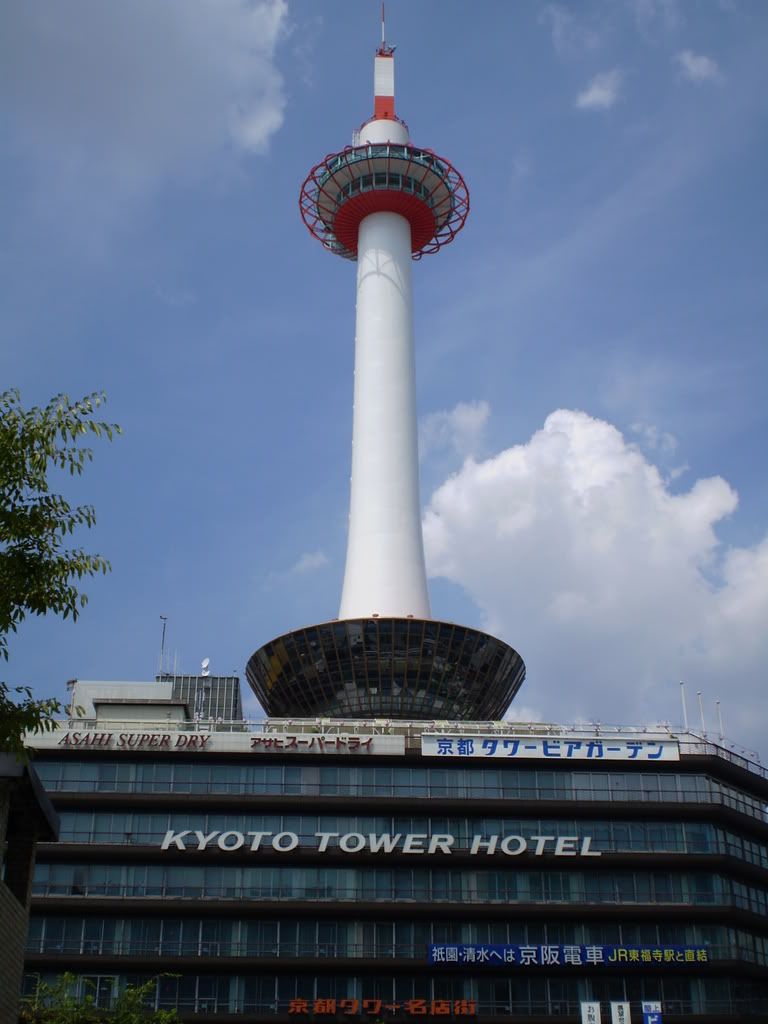
I'm not sure when we'll return to Kyoto--but since it's part of the same conurbation as Osaka and Kobe, it's no great hassle to reach by train. (And you should see Kyoto's train station!)

Saturday, November 17, 2007

"Watching" cricket in Japan

Well, this has turned out to be a good weekend. Yesterday we scaled Mt Shosha and visited the Engyō-ji Temple complex--famous for being the location of certain scenes in The Last Samurai--before venturing into an onsen for the first time. We also joined other ALTs in Himeji for a Thanskgiving dinner, and finished the day in a karaoke booth (also for the first time since our arrival in Japan). Unfortunately, further details and pictures are going to have to wait until a future post.

Today Emma is being treated to a guided tour of Kobe's shopping districts courtesy of several female members of her ESS club. I'm supposed to be occupying my time learning Japanese--but instead here I am, procrastinating, as usual. Maybe I would be able to concentrate if I was able to tune into the cricket match currently underway between Australia and Sri Lanka in Hobart, but unfortunately due to rights restrictions the ABC stream of its radio coverage of the game is only available to listeners within Australia. So I am forced to resort to the second-best option: a ball-by-ball text coverage of the match provided by cricinfo.com. For those of you who are interested, Australia currently has Sri Lanka bent over the bonnet of a Holden Commodore sedan, with their pants somewhere around their ankles (again); Australia having declared their first innings at 5 for 542 and having recently dismissed their hapless (and pantsless) opponents for 246. Interestingly, Ponting decided not to enforce the follow-on, and Jaques and Hayden are currently occupying the crease and scoring at about 5 an over.

If only the Japanese followed cricket more ardently than they do. (One good reason for this might be that it is virtually impossible to watch live cricket here, despite Japan having in recent years been elevated from Affiliate to Associate membership of the International Cricket Council.)

Cricket is played in Japan, by the way:

Tuesday, November 13, 2007

Matt and Emma's (Very Brief) Guide to the Federal Election (Senate)

Emma and I have recently received our postal vote forms, and we've been discussing who we will vote for (and in what order of preference). For those JETs who are reading this, the Australian Embassy in Japan website has information on overseas voting, but you basically have a choice of either pre-poll voting at your nearest Australian consulate, voting at the Embassy or at a selection of consulates on polling day, or postal voting (a form for which is available here).

If you want detailed information on how to vote, your best bet is to consult the relevant pages at the Australian Electoral Commission website:
How to vote for a Member of the House of Representatives
How to vote for a Member of the Senate
But the long and short of it is that at the polling booth (or in the mail, if you're postal-voting), you'll receive a green House of Representatives ballot paper and a white Senate ballot paper. While on the House of Reps paper you must mark all of the boxes in order of preference, the Senate ballot paper is slightly more complicated. There you have the option of either marking all of the boxes below the big black line in order of preference, or placing a "1" in the box next to the party you want to vote for above the line (leaving all other boxes unmarked).

Now, remember: Australia has a preferential voting system, and this includes voting for Members of the Senate. Each party (actually each "group" on the Senate ballot paper: candidates for a particular political party are grouped together, but so also are some independents) lodges with the AEC a full ticket of preferences to all candidates who appear on the ballot paper. It's called a group ticket. Why is this important? Because if you vote above the line, you're consenting to having your preferences allocated according to the group ticket. Apparently more than 95% of voters use this option--this is why you hear of various parties doing "preference deals" and so forth--and I'm betting that relatively few of these are aware of its implications. If you're thinking of voting above the line, I suggest you take a bit of time to look at your state's group voting tickets first.

Anyway, here are the websites of the parties (and independents) that appear on this year's Senate ballot paper:
Nationals
Citizen's Electoral Council
Christian Democratic Party
Non-Custodial Parents Party (Equal Parenting)
Democratic Labor Party
Liberal
Australian Democrats
One Nation WA
Family First
Senator On-Line
Carers Alliance
Australian Labor Party
Eric Wynne (Christian Independent)
Kevin Fitzgerald (Independent)
Climate Change Coalition
Socialist Alliance
Jennifer Armstrong (Secular Party of Australia)
Michael Tan (Secular Party of Australia)
What Women Want (Australia)
Conservatives for Climate and Environment
LDP
The Greens
Richard McNaught (Independent)
Edward Dabrowski (Independent)

Friday, November 9, 2007

Oh yeah: the blog header

. . . hasn't worked out as well as we hoped. Anyone familiar with GIMP or Paint.Net and who might be able to suggest how we can get the text to stand out more from the image, we're all ears.

Tuesday, November 6, 2007

October

OK, I have a backlog of three weekends worth of touristy adventures to get through (not including the current weekend), so here goes:

October 13-14: Akashi Planetarium

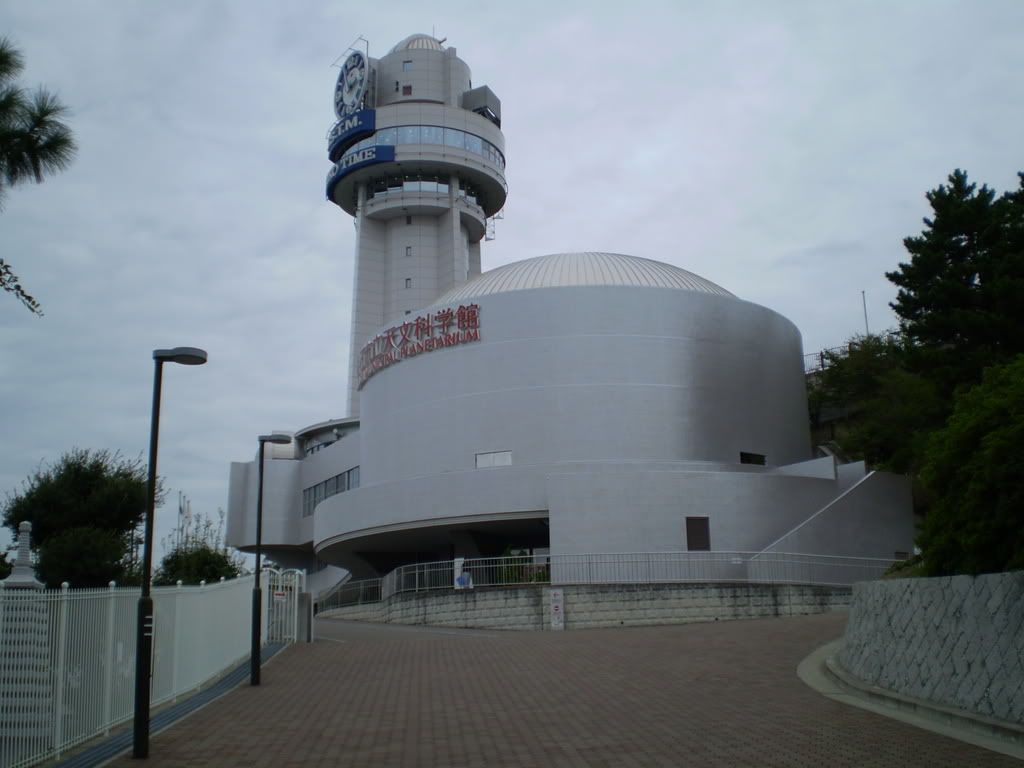
A 3 minute walk north of Hitomarumae Station on the Sanyo line (or 15 minutes east of Akashi station), this is an astronomy education centre housed in a building that looks as though it should be gracing the cover of a 50s science fiction novel. The planetarium features exhibits on the stars and planets, as well as the signs of the Zodiac and the history of timekeeping. Why the history of timekeeping? Because Akashi Planetarium stands exactly at 135 degrees east longitude, and is used to determine Japanese Standard Time. We would have gotten more out of the exhibits if we understood Japanese, but they were interesting nonetheless.

The Imax-style skyshow itself would have been more enlightening if we understood the language, but we followed as best we could. The narrator highlighted and discussed several planets and constellations visible in the northern hemisphere night sky, and at one point played a short cartoon depicting the tale of one of the Greek mythical figures for which many of the constellations are named (I forget which one), underscoring how far human astronomical knowledge has come from the days when the significance of constellations was taken seriously. After a short while I tuned out the drone of the narration, and simply allowed myself to become lost in all those stars and planets. It was very peaceful and relaxing.

The building also sports an observation tower, giving a 360 degree view of this particular corner of Hyogo—including fantastic views of Awaji Island and the bridge. You can take an elevator to the top, or you can act like you’ve got a pair and climb the spiral staircase, tracing the history of life on Earth as you go. Click here for a slideshow.

October 20-21: Sumaura Kooen/Suma Aqualife Park

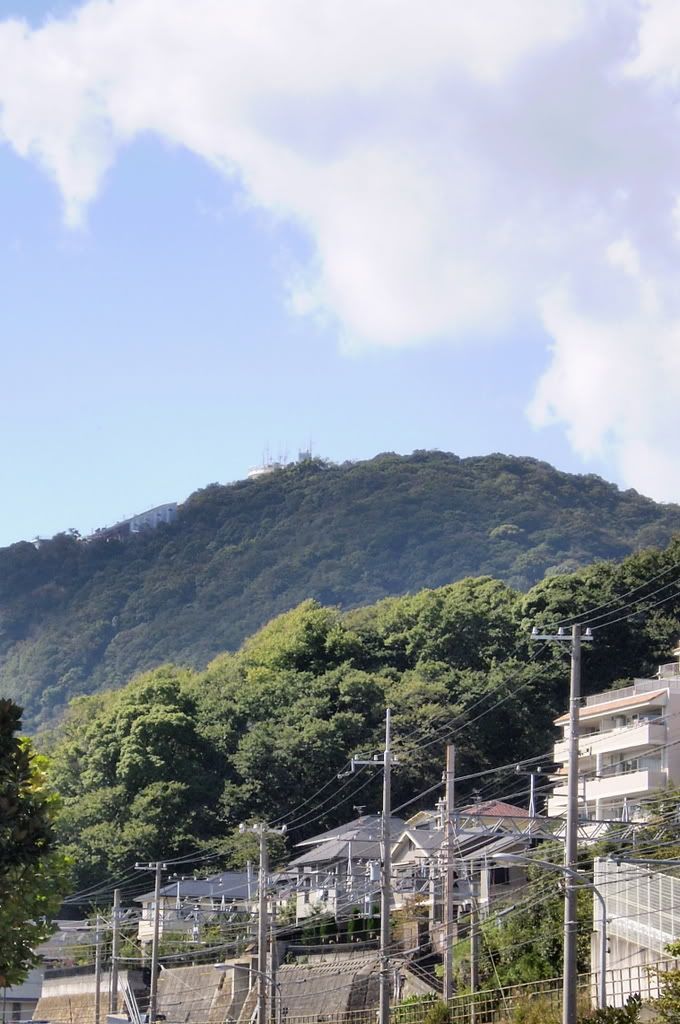
When I first espied Sumaura Kooen on my first day in Kobe, I thought to myself "I'm so climbing that!" The hill (actually called Hachibuse-yama) is an outlier of the Rokko Mountains, and at 248m it dominates the skyline of the adjacent Suma and Tarumi areas. While there is the option of taking a cable-car up to the summit, we opted for one of the thickly-wooded trails that wind their way to the top, having purchased hiking boots in Perth for just this kind of activity. The hill features various ancient shrines and commands amazing views of Kobe city (and beyond) to the east, and the Akashi-Kaikyo Bridge to the west. In Perth I used to spend hours on end wandering the tracks that run through Kings Park; in Sumaura I think I've found a replacement.

How to get there: take the Sanyo line to Sumaura Station. A cheaper option would be to take the JR line to Suma, then walk 15 mins. west.

Slideshows:
Climbing Sumaura
View from the summit
Sumaura area

The following day we returned to Suma to visit its well-known aquarium. (Plus we had coupons for discount entry.) This was my first visit to an aquarium since I went to Underwater World when I was about eleven or twelve years old. Suma has many advantages over the aforementioned: it is far more reasonably-priced, its giant fish/shark/ray tank makes for one breathtaking entrance-statement, and nobody has yet slipped Suma's dolphins any happy pills, so you can still see them performing regularly. The tropical fish are amazing, and thanks to Emma's nifty camerawork (and image manipulation work) we've hopefully managed to capture that for you.

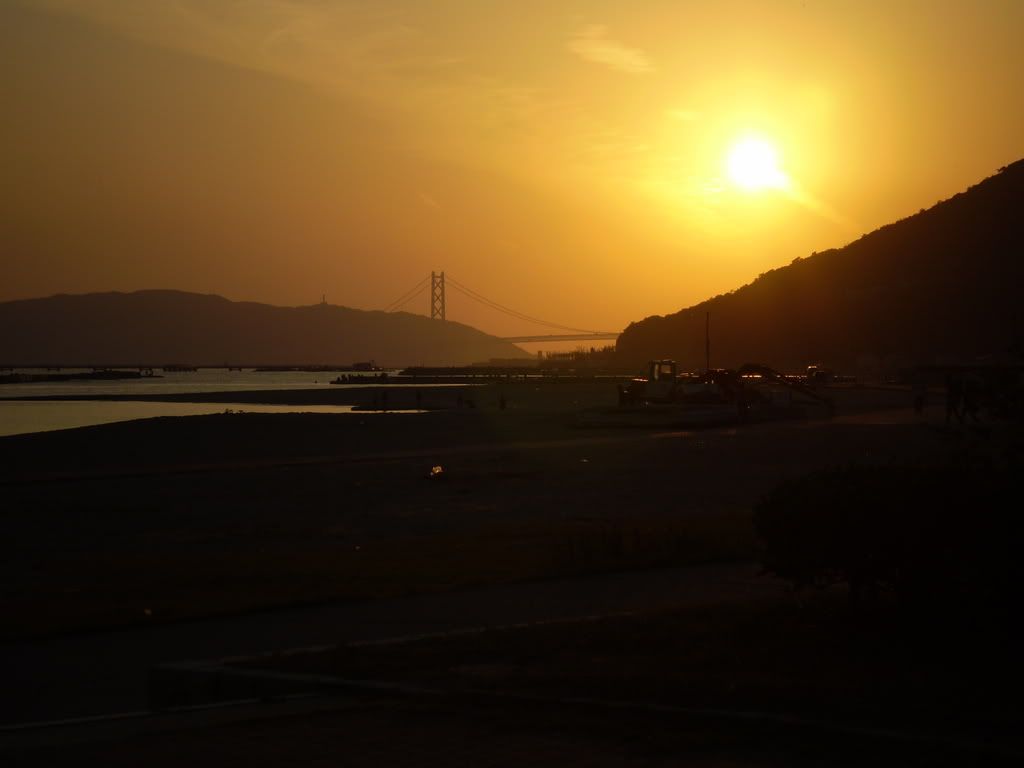
How to get there: From JR Suma Station, walk 15 mins east. In warmer months I suggest walking there along Suma Beach, which is apparently a very popular spot with the citizens of Kobe and is highly reminiscent of the beach in William Shakespeare’s Romeo and Juliet (albeit minus Harold Perrineau firing pistols into the water for no apparent reason whatsoever). Take the beach route back to the station as well if you're returning in the late afternoon: it's worth it to see the sun setting over the shoulder of Hachibuse-yama. Click here for slideshow.

October 27-28: Oji Zoo

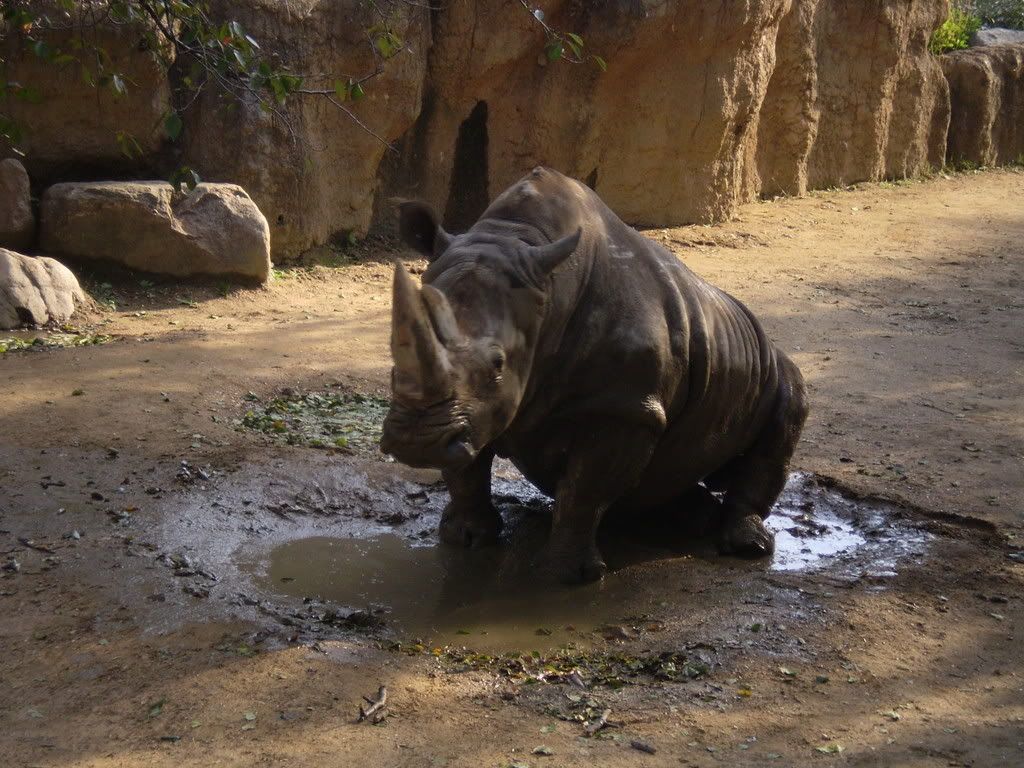
I learned something new this weekend. In fact: I learned three new things. First, while pink flamingos might be charming in a kitschy kind of way as lawn ornaments, a pen of live birds has to be one the foulest smelling things on Earth. Second, I was wrong about the first point: the foulest smelling thing on Earth has to be Japanese brown bear urine. Third, Amazonian pythons doubtless seem intimidating when encountered in the wild, but when you coop them up in a glass cage, they just look really, really bored.

Come to think of it: the same could be said for most of the animals we saw that day. That could explain why the European timberwolf, which is really just a dog in the “state of nature,” was playfully following children from window to window. On the other hand, it might have been hungry.

Click here for the slideshow.

Oji Zoo is about a 10 minute walk north of Nada Station on the JR line.