Thursday, February 14, 2008

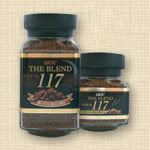
How can I describe the taste of UCC Blend 117 instant coffee?


You know how there's this really rare and delicious kind of coffee that is made from beans that have been fermented in the digestive tract of a civet cat? Well, UCC Blend 117 tastes like the manufacturers didn't bother to wait for the beans to drop.*

Mind you, UCC drip coffee tastes fantastic. But as far as instant goes, Japan's going to have to dig deep to top Mocha Kenya, Moccona Classic or Nescafe Gold. (There is a "Nescafe Gold Blend" available in Japan, but it's just not the same.)

*Pablo. That's what it tastes like. Pablo. Probably great for smuggling cocaine through Customs, but nobody in their right mind actually drinks the stuff.

Tuesday, February 12, 2008

Setsubun


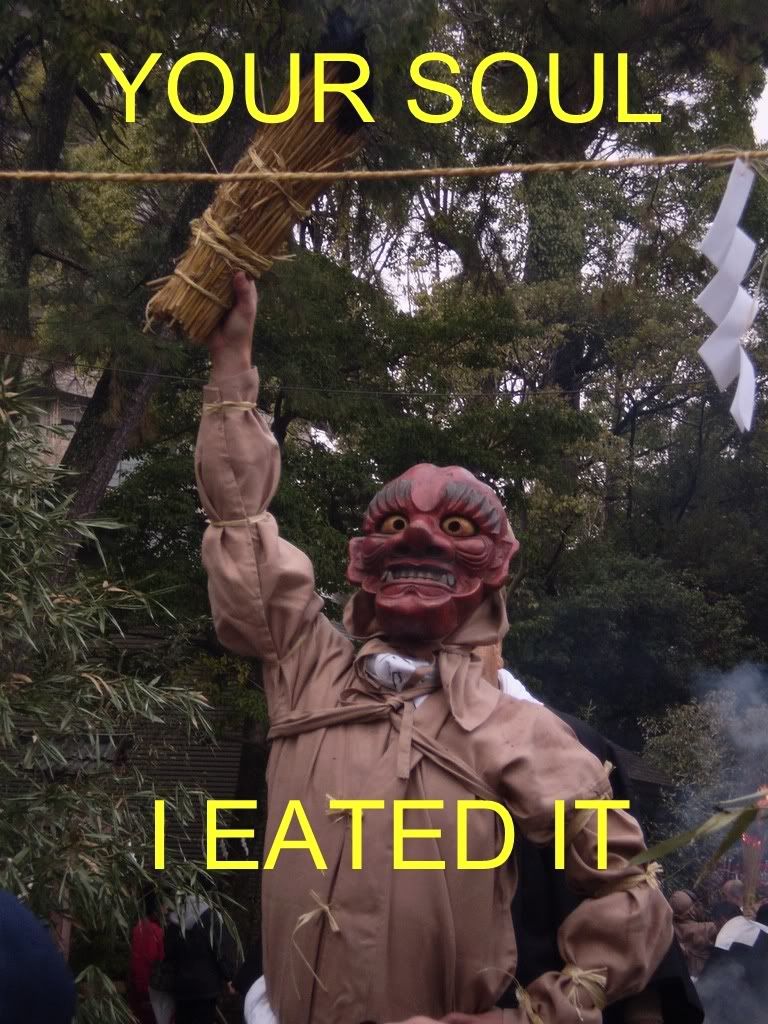
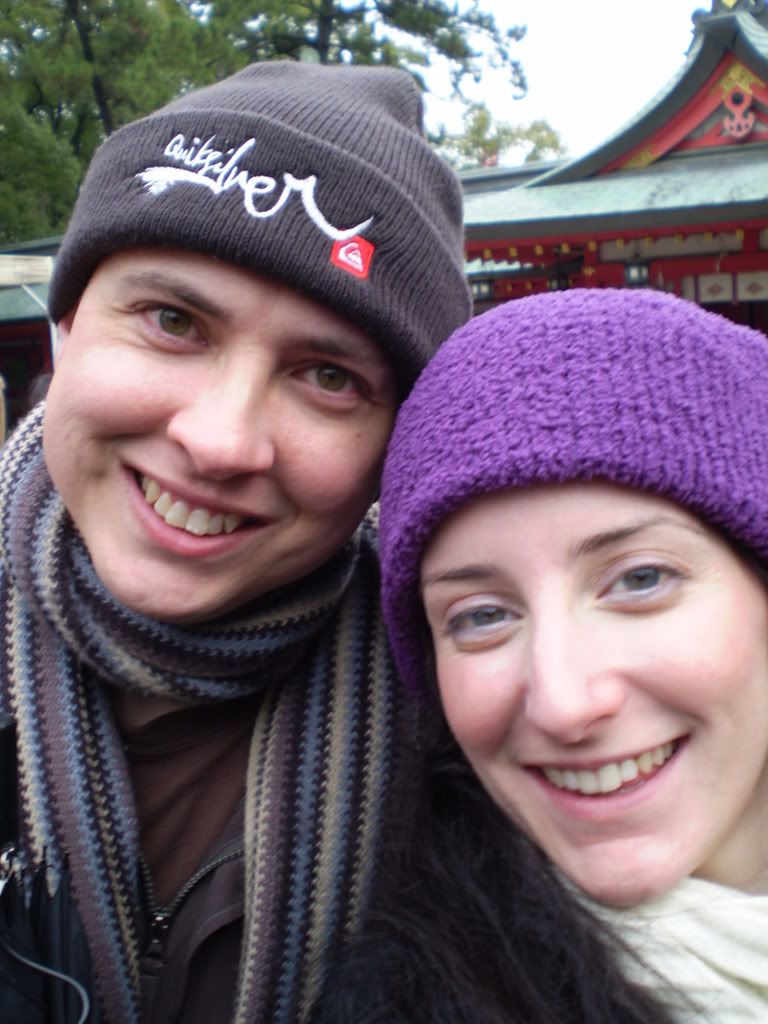
Two weekends back, Goran, Dan K, Emma and I visited Nagata shrine for the Setsubun festival. Technically, there is a setsubun at the beginning of each season, but the one at the beginning of "Spring" (I use the scare quotes deliberately) is almost like a second New Year, when the locals cleanse themselves of ill fortune by throwing soy beans at Oni (a.k.a. demons).

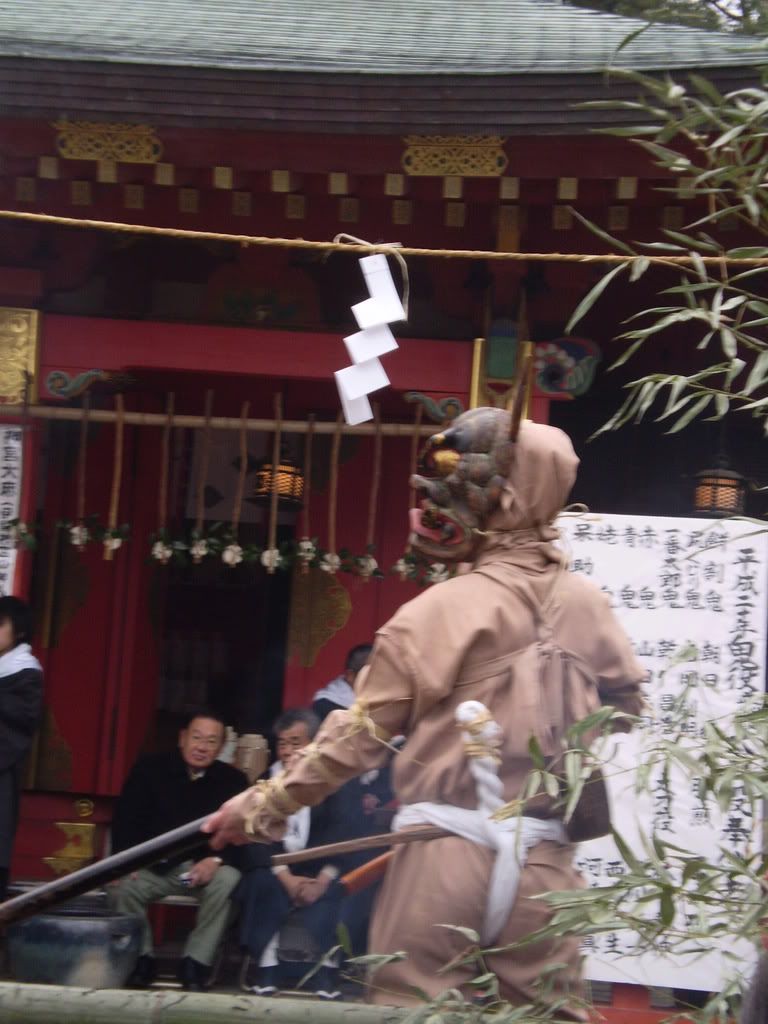
Nagata Shrine lies close to the commercial school at which I teach on Monday afternoons, and according to legend it dates back to the 4th century CE, when it was founded by the Empress Jingu. On February 3rd of each year it plays host to the Tsuina ceremony, which involves the exorcising of demons by means of seven youths wearing demon masks and dancing to the music of a conch shell. If that description hasn't sold it for you, maybe the slideshow below will:
(Click the image above to see a slideshow)

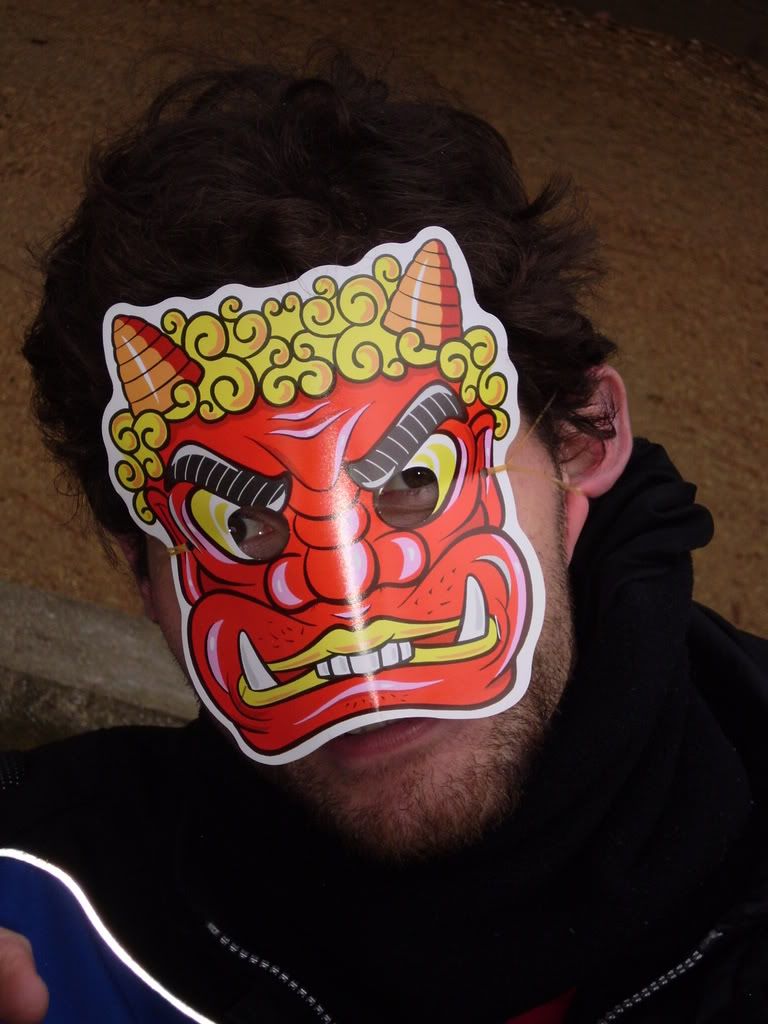
Upon entering the shrine, we armed ourselves with soybeans in the hope of arcing them at some bad boys from Hades, but alas! no beans were to be cast that day, either on stage or off it. So Goran amused himself by squeezing his head into an Oni mask that was far too small for it, and frightening Japanese children (and Emma). The rest of us sampled some of the wares at the food stalls that always accompany Japanese festivals, including a delicious fish-shaped pancake waffle known as taiyaki.
The greatest trick the devil ever pulled was convincing the world he didn't exist. (Click the image for a slideshow)

Monday, February 11, 2008

For windy winter worriers

(P.S. This post was written by Emma)


I’ve always suffered in winter. Its frosty mornings, biting cloud-covered middays, bitter evenings, with nothing but night’s miserable cold for bookends. Indelible memories of moments in high school classrooms spent trying to will blood to return to the ends of sore blue toes will be forever attached to its very utterance.

It was with caution, then, that I approached Japan’s winter, undoubtedly much more severe than any I had experienced in Perth’s temperate climate. And now after 2 months of winter already past, I feel (hopefully not prematurely) assured that not only will I survive Kobe’s worst, but indeed thrive in it.

Now, it’s not that my circulation has improved or that it’s unseasonably warm, it’s that my outlook for winter dressing has changed. (Actually I am told that it is a little warmer than last year, but with maximum temperatures not exceeding 5 and 6 degrees, I feel safe in saying that comparative to Perth, it’s cold).

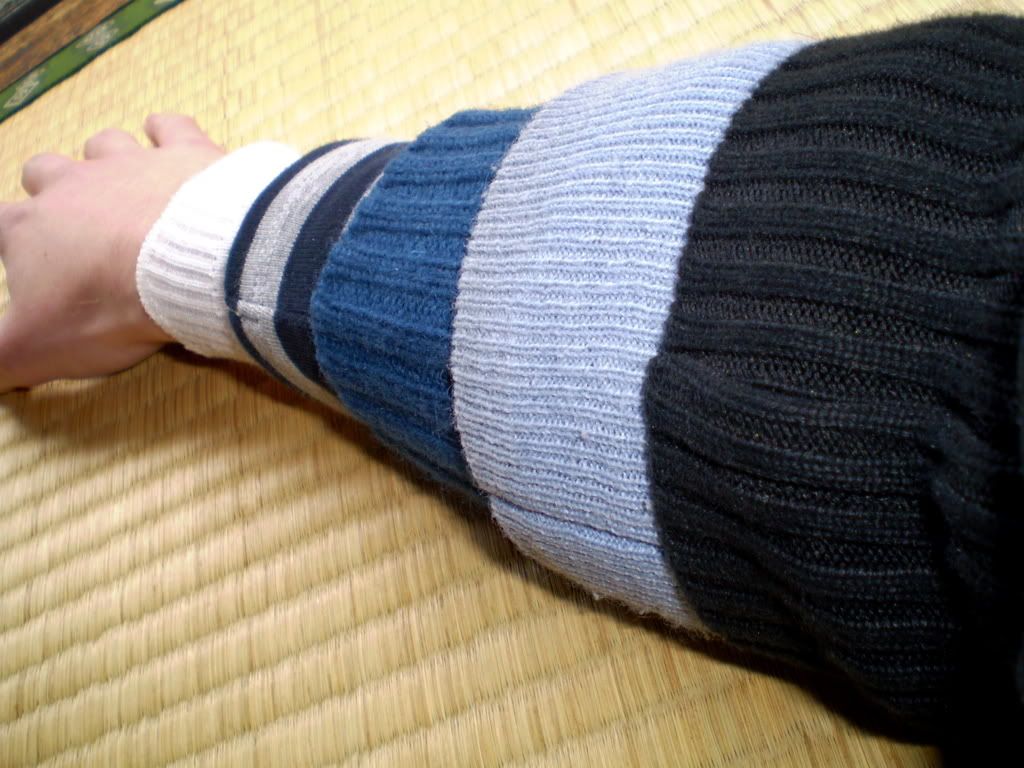
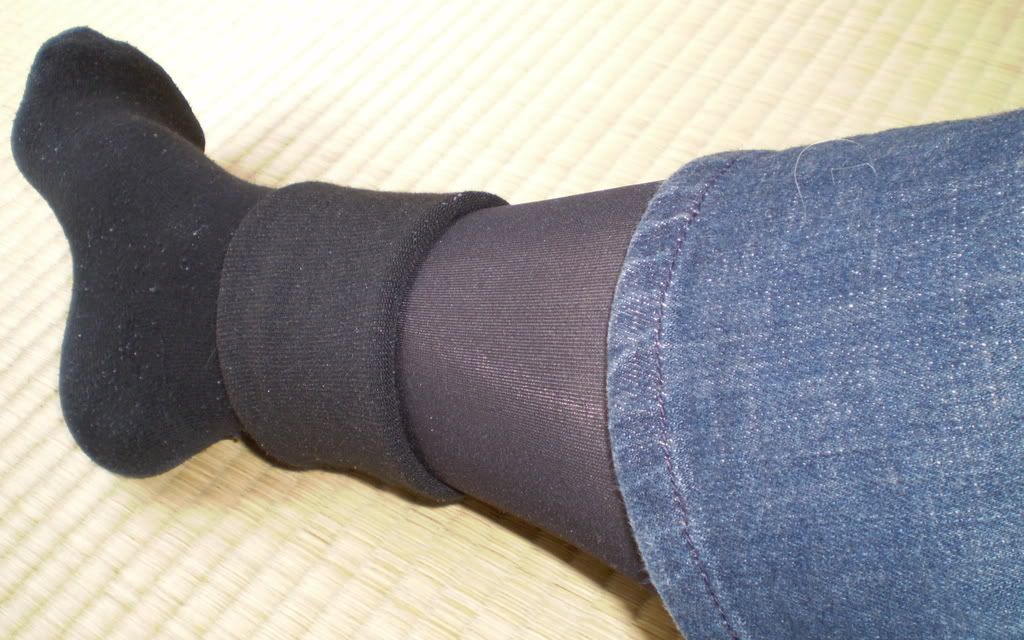
During a Perth winter, wearing stockings, knee-hi socks, wool fully-lined pants, long-sleeved nanna vest, turtle neck, wool jumper, wool cardigan, hooded knee-length down jacket, scarf, insulated gloves and beanie would get you laughed all the way to Tasmania. But here in Kobe . . . well actually I get laughed here too for my super doper heat retaining shield (commonly known as clothes), every single day in fact. However, the difference is that here in Japan I am a foreigner, so it’s perfectly acceptable for me to be “soft.”

Nonetheless, and this is a lesson I will be taking home with me, when it’s cold it’s okay to wear too many layers because, as I have learnt, being ridiculed pales in comparison to having a happy winter!

For those Perthies wanting to take the “Keep Warm this Winter 2008 Challenge,” here’s the bare minimum of layers needed to stay toasty warm no matter where you are:

Do this and you to and kill the winter blues!

Friday, February 8, 2008

While we probably should be watching Japanese TV to pick up the language . . .

. . . we've been occupied with this instead:


Life on Mars is a British cop drama set in 1973, but with a twist: the main character is from 2006, and as far as he is aware he is in a coma after having been hit by a car. Brilliant acting, great storylines and--the theme music aside--a fantastic soundtrack. Here are a few samples:

David Bowie -- "Life on Mars?"


Wings -- "Live and Let Die"


Slade -- Coz I Luv You

Saturday, February 2, 2008

Hiroshima

Oh dear!

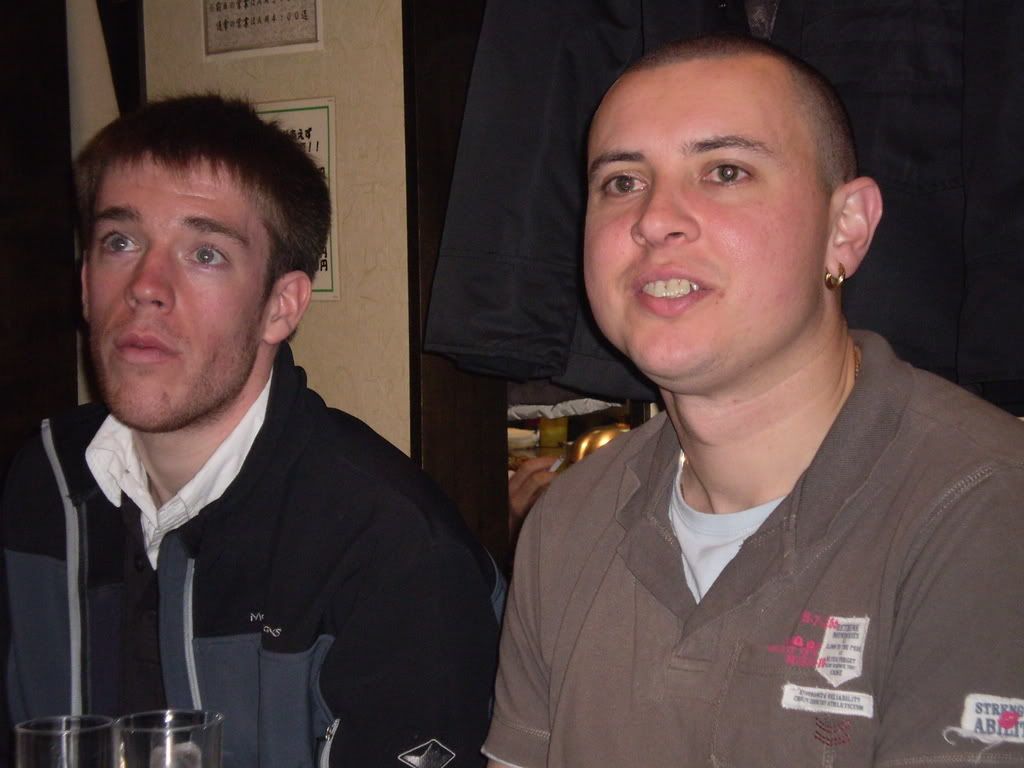
It’s the end of January and we still haven’t posted about Matt and Emma’s et al. Excellent Adventures in Hiroshima. Well with the same crew that attended the nabe feast at Goran’s pad, we headed down to Hiroshima on the 1st of January. There were a few tired and sore heads on the 6 hour train ride (Cassie might want to develop her own spin off show called Cassie and Cassius’ Night to Remember in the comments), but nothing can stop ESL teachers enthusiasm for word games—on this occasion our penchant lead to a word association game marathon—or our joy at passing through valleys walled by snow topped mountains.
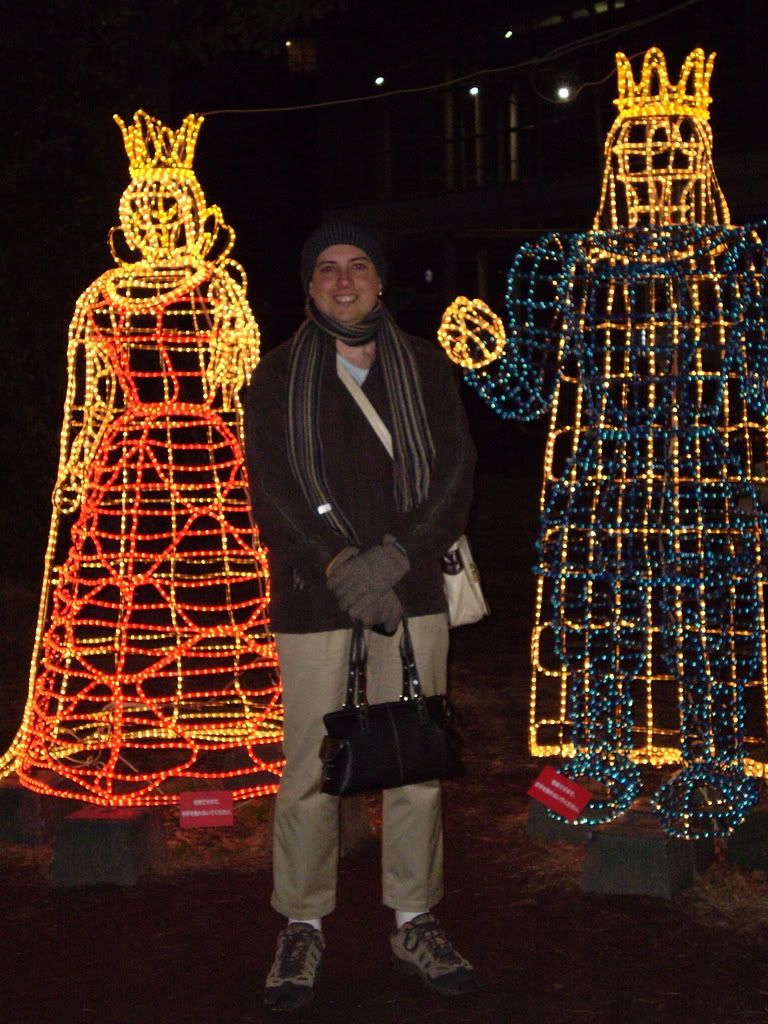
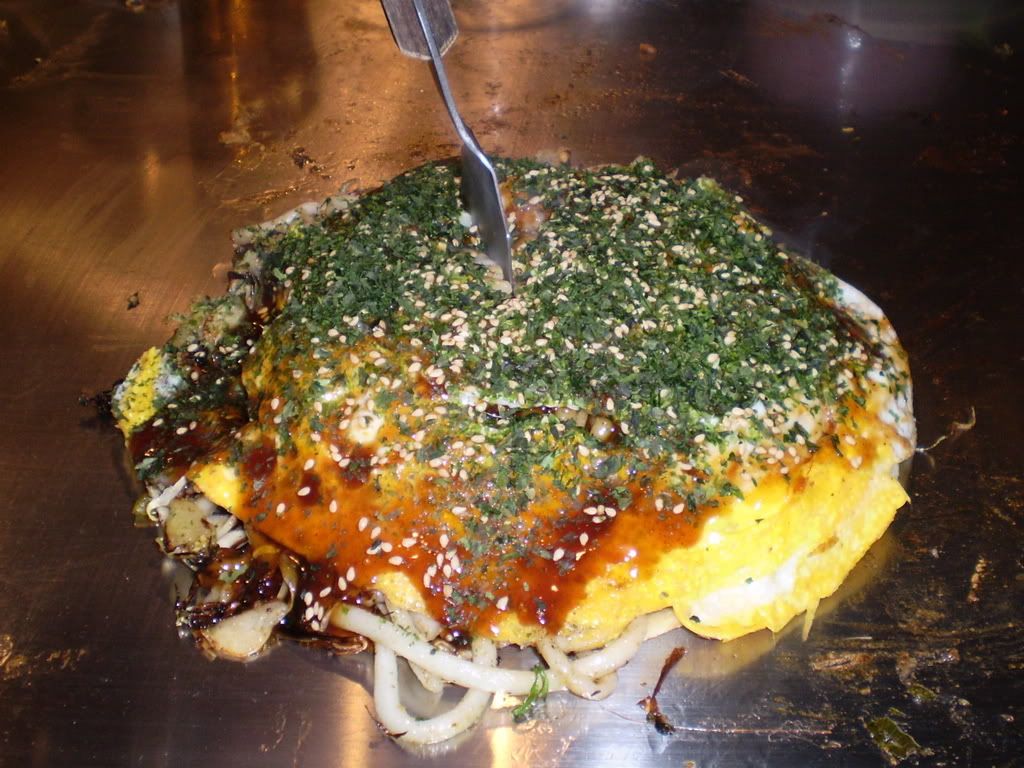
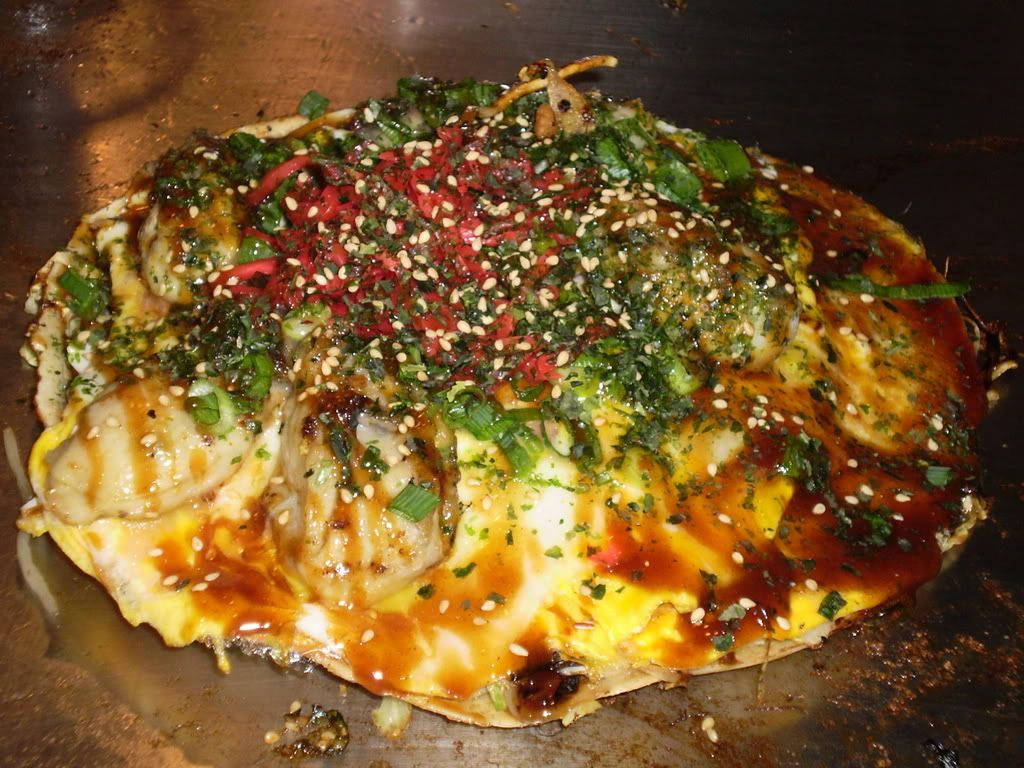
After a fabulous okonomiyaki dinner, the oyster topped one being my personal favourite, we strolled down one of Hiroshima’s delightfully wide streets. Being the festive season, there were many figures dressed in different coloured lights lining the street, they made up a presentation called Dreamination. While the first figure of a red phoenix was spectacular with its imposing puffed up breast, none of us would have been fazed had it suddenly come to life and breathed hot fire in our direction as we would have quickly quelled it with our equally icy hands.


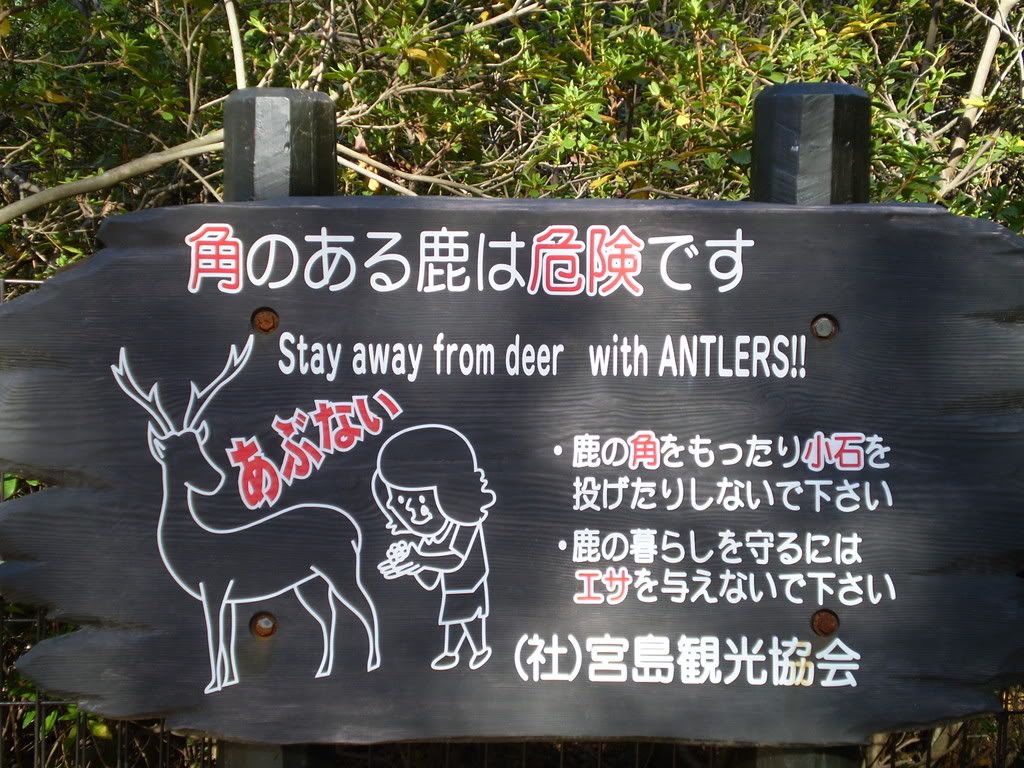
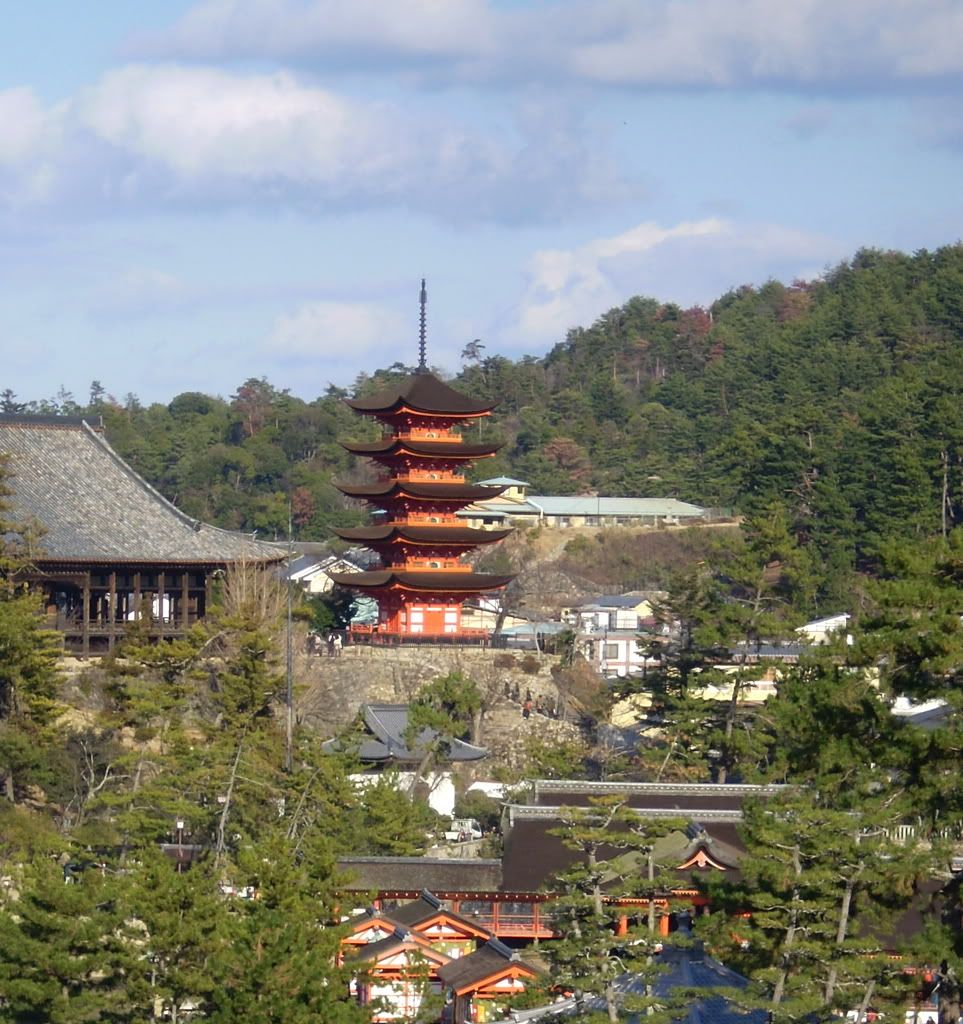
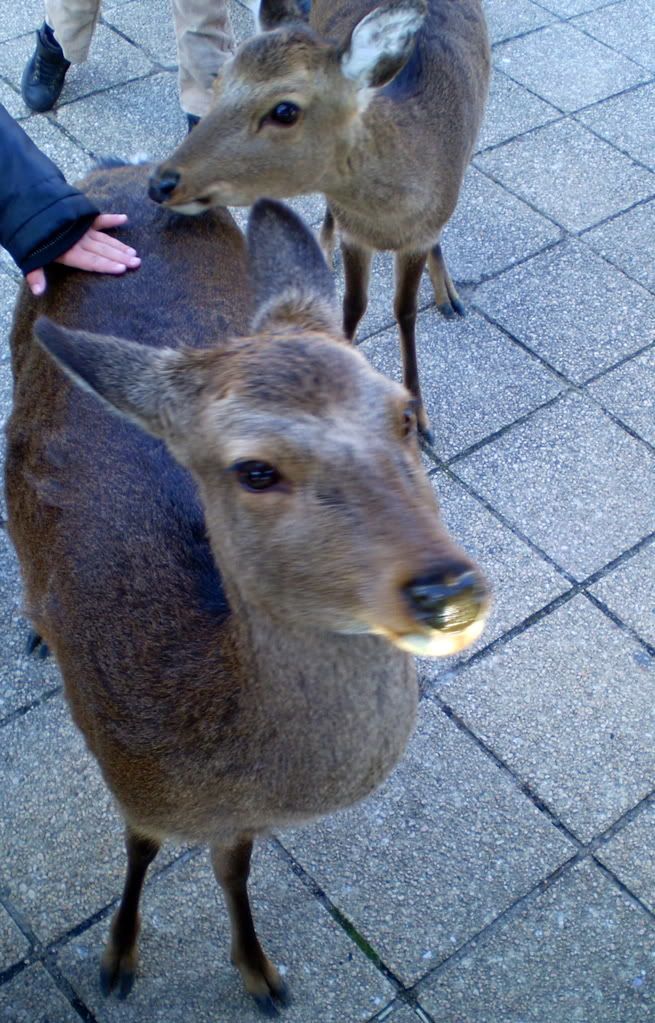
The next day we went to Miyajima Island via tram. This mountainous island is listed among Japan’s three most beautiful places and no doubt it is. At the ferry station we were greeted by Miyajima’s beautiful silhouetted peaks juxtaposed against the clear blue of the winter sky. Approaching by ferry, some of the islands mysteries were unveiled when the red floating gate, for which the island is famous, came into sight as well as the appearance of its snow topped trees. Finally, once we docked, the last of the islands endearing elements came to the fore as gentle deer wandered around nuzzling at our hands and bags.


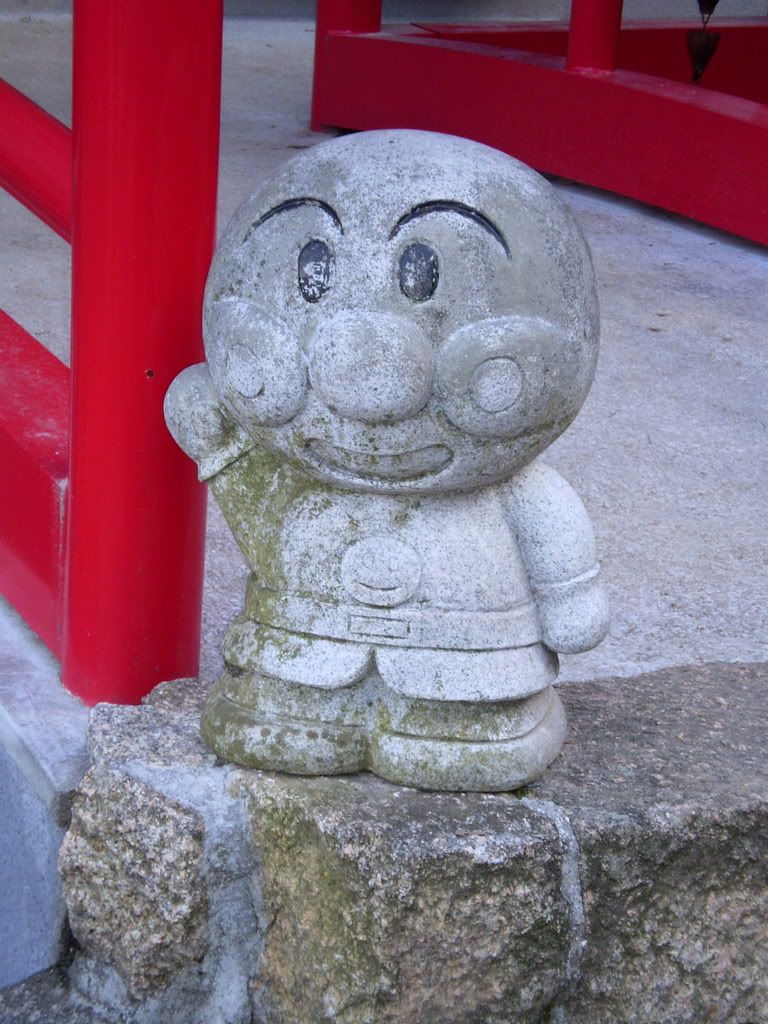
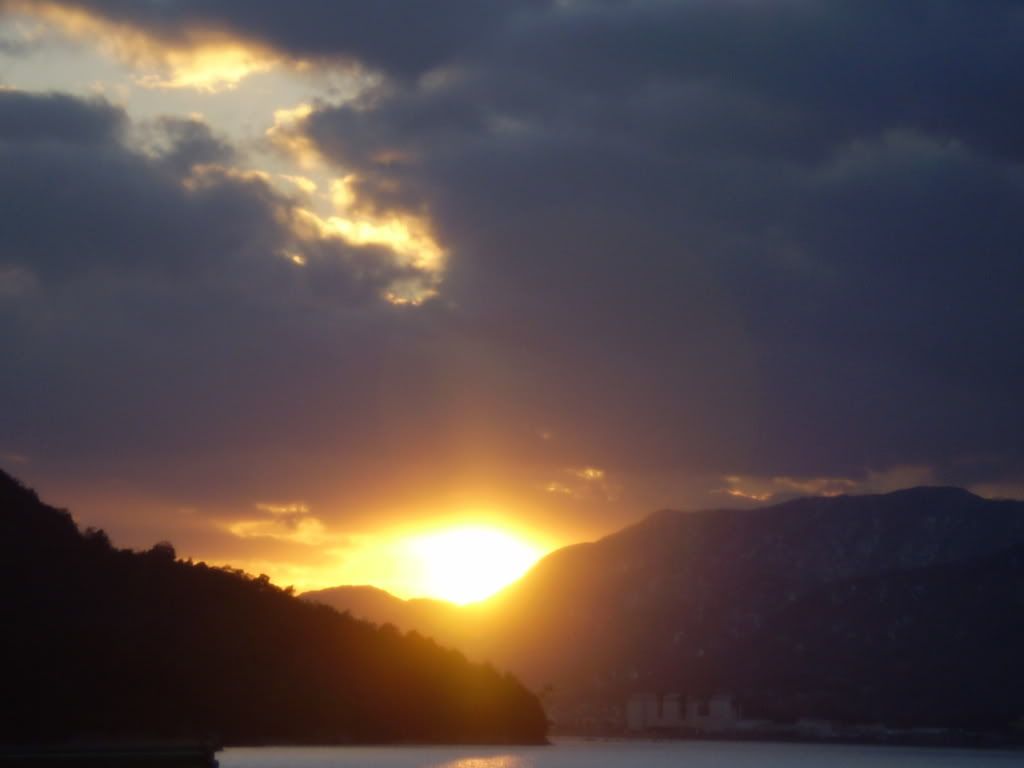
Our group split so we could pursue our different interests, some went to scale the mountains, others went to shop and wander around the ferry area, but Matt, Amanda, Tamara and I took a leisurely walk around the lower hills and temples. There we found that not only is the island itself beautiful, but so is the view it commands of the mainland. Also, that not all temple statues inspire awe—check out the Anpanman look-alike (the god of bread perhaps?).
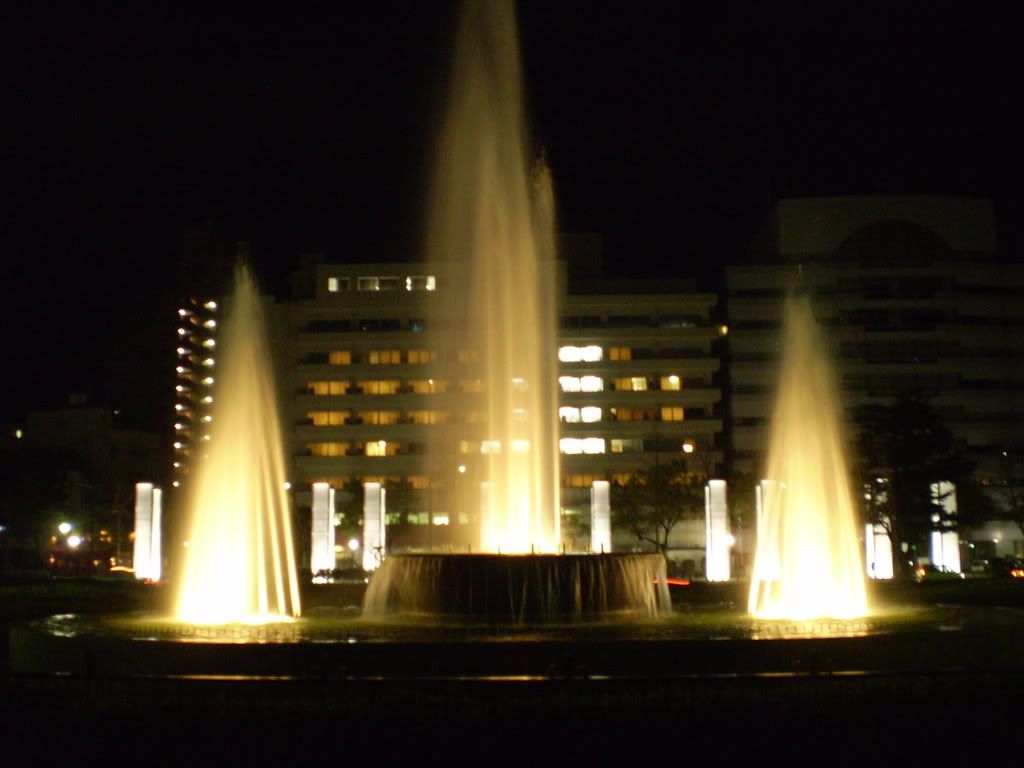
By night we returned to Hiroshima city and walked around Peace Memorial Park, the site of the Peace Museum and the Atomic Bomb Dome. The latter is the remaining shell of the Hiroshima Prefectural Industrial Promotion Hall, which was the building closest to the centre of the atomic blast that stayed standing. The structure was eerily lit with green flood lights. Rubble, which had once been the hall’s walls, lay at its base. The destruction we witnessed here was only the start of what was to be a harrowing morning at the Peace Museum the next day.

The museum had a combination of facts about nuclear weapons and their effects, Japan's involvement in the Second World War, the history of Hiroshima, peace efforts and anti-nuclear treaties, and remains of people who were killed by the bomb. This last section of the exhibition was the most moving as it included (translated) oral accounts of the day of the bomb, the charred remains of school uniforms and supplies that were worn by children who were killed in the blast (often a name tag on a school bag or lunch box being the only way a parent could identify a child as their own), life size models of people with their arms outstretched showing what the melted and hanging skin from their fingertips would have looked like, and the steps of a bank located at the centre of the blast upon which is a permanent shadow--the only remains of a man who sat there waiting for the bank to open on the day of the blast. Finally, and perhaps the most devastating because of the lingering suffering they imply, are the collection of fused spine joints, mops of matted hair, ulcerated tongues, blackened fingernails and skin, pictures of swollen scarred skin, and the recollections of desperate mothers who watched their beloved children spew blood, all of which were aberrations in the human body caused by exposure to radiation. It was quite a sobering morning.
Tuesday, January 29, 2008

Australia Day 2008

On Saturday I decided to get into the spirit of things and tune in to the Triple J Hottest 100, and found that I didn't recognise most of the songs--including the winning song. ("Knights of Cydonia" by Muse--which isn't bad after a few listens.) That could only mean two things: I'd been living in Japan for a good part of 2007, and I'm getting old.

Well, 31 isn't exactly old, but then age is a relative thing. I realised this one of the last times I set foot inside a nightclub in Perth, and felt like I had stepped into a child care centre. So it was with some trepidation that I ventured into Osaka's Club Pure with young Emma and the other Perth JETs on Saturday night. You see, when I think of thirtysomething males in nightclubs I think of bearded and be-stubbled men wearing tight black jeans and those Chinese/Hawaiian-style shirts that were popular for about 5 minutes at the end of the 1990s (after which most died an honourable death in the local Vinnie bin before resurrecting themselves on the backs of Centrelink clients), dirty-dancing to Gwen Stefani with some pre-pubescent muffin-top. Honestly, boys, it's like watching someone do the "Lambada" with a fetus. And I don't want to be one of those guys!

Fortunately, I was able to overcome my neurosis long enough to have a really enjoyable night with my JET friends (the Daniels C and K, Goran, Aimee, Michelle, Susie and Amanda), as well as chat with (chat with, people, not chat up) some of the locals. There was a dodgy character haunting the dancefloor like the unmistakable odor of eructated garlic ramen--someone who doubtless would have felt right at home at The Shed or The Craic (for those of you with long memories) or Gobbles (for those of you with really long memories)--but the female clientele, gaijin and otherwise, were wise enough to give him a wide berth. The cocktails--watered down though they must have been at $25 for all-you-can-drink--were strong enough for me to lose my inhibitions regarding uncoordinated dancing and seriously off-key singing. Emma, as you know, needs no help in either of those departments, but she appreciated the chance to let her hair down all the same.

Michelle stayed at our place that night, and the next morning was telling me about the mukade (that's giant centipede to you) she encounters in her house from time to time. I showed her a site listing the 5 Most Horrifying Bugs in the World (language warning). The mukade doesn't make an appearance, but another insect commonly encountered in Japan does: the Japanese Giant Hornet. Watch as 30 of them massacre a hive of 30, 000 honeybees.

Saturday, January 12, 2008

Christmas & New Year 2007

Do the Japanese celebrate Christmas? Yes and no. Christianity (kirisutokyou, "The teachings of Christ") is a minority religion here, observed by only 1% of the population, so there is little emphasis placed upon the religious aspects of Christmas. (We didn't see any nativity scenes, for instance). Here the emphasis is more on the non-religious iconography and traditions of Christmas--Christmas trees and gift-giving, for instance--as well as its commercialism. Christmas paraphernalia appears in Japanese shops almost as early it does in the West. And while Christmas cards are widely available, card-giving is more generally associated with New Year, which in Japan is far more important than Christmas--as any Westerner working here soon discovers. December 25th is not a public holiday in Japan (though December 24th is: it's the birthday of the current Emperor).

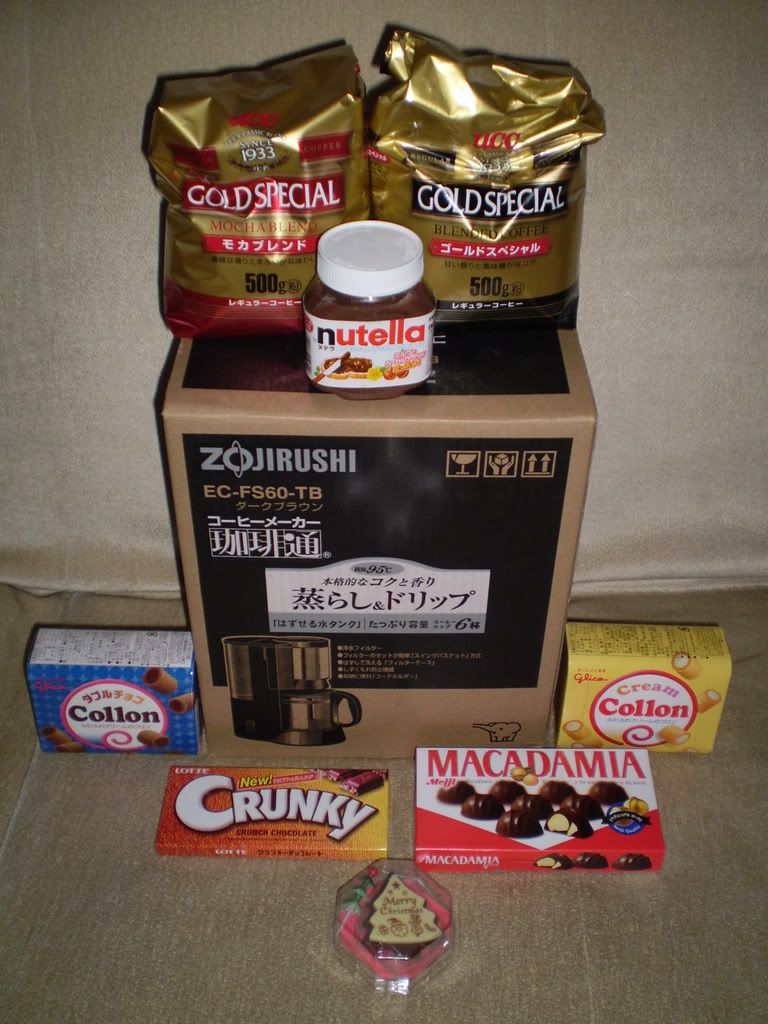
Emma and I both had to work on Christmas Day, and did our celebrating on Christmas Eve. It was the first time Emma got to open presents on Christmas Eve without protest from me! Here are the presents Emma gave me, including a drip coffee-maker:
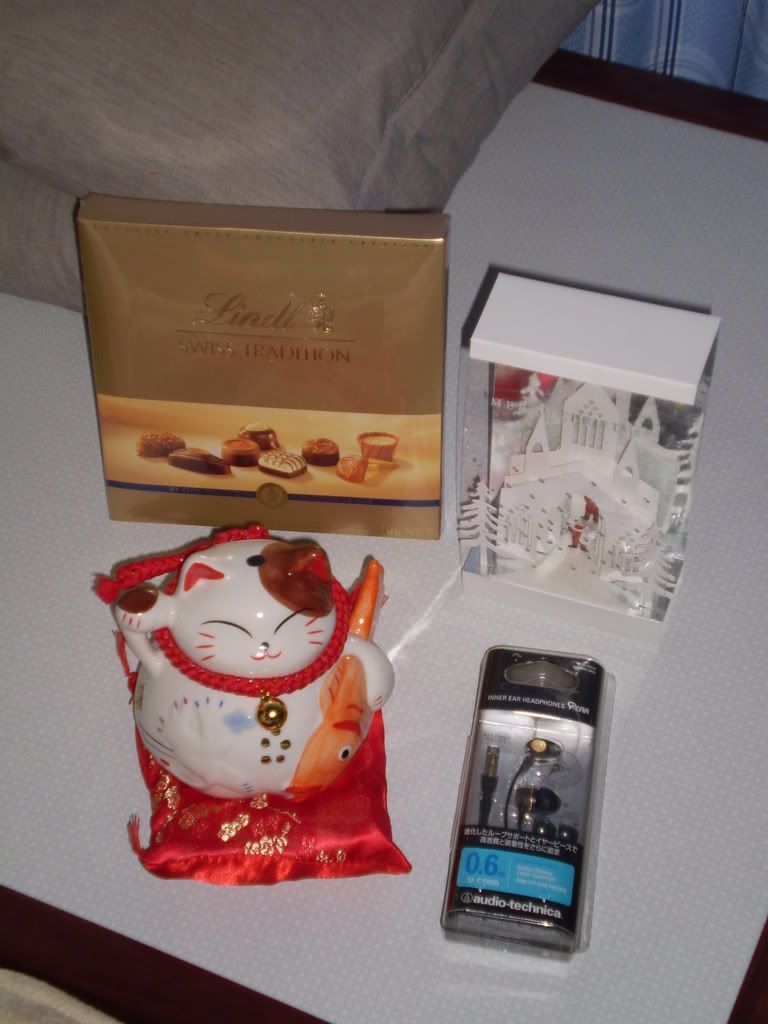
And here's what I gave Emma (pillows not included):
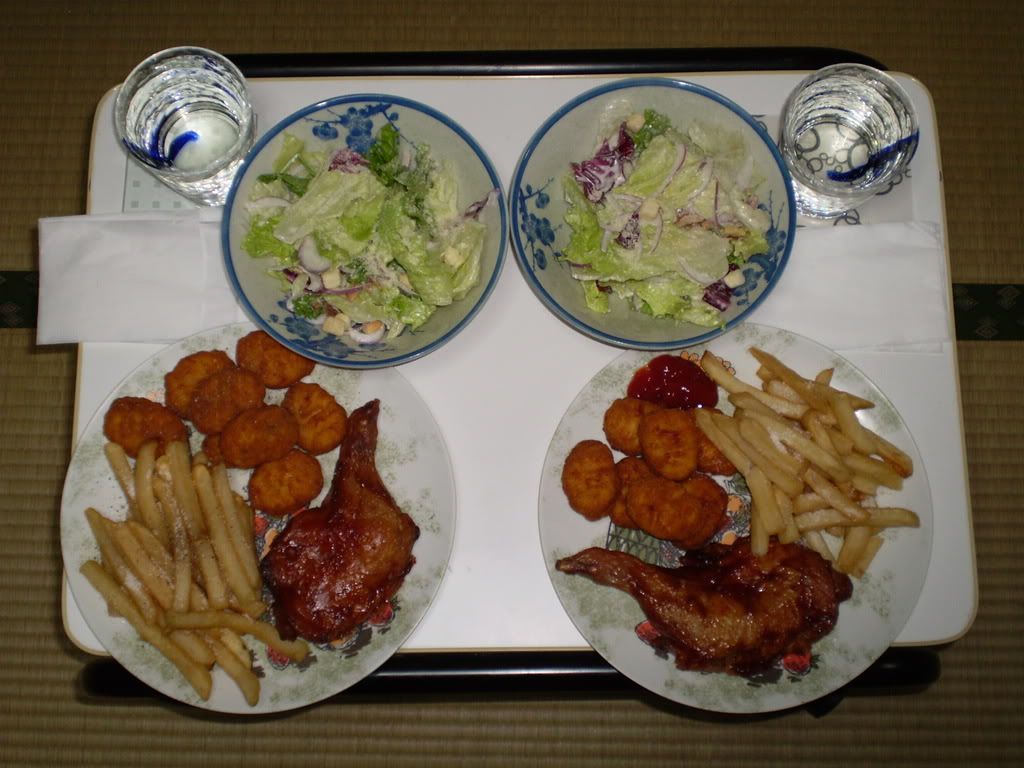
Since many of our JET friends were either out of town or otherwise occupied over Christmas, we opted to celebrate on our own with a traditional Christmas dinner:KFC . . .

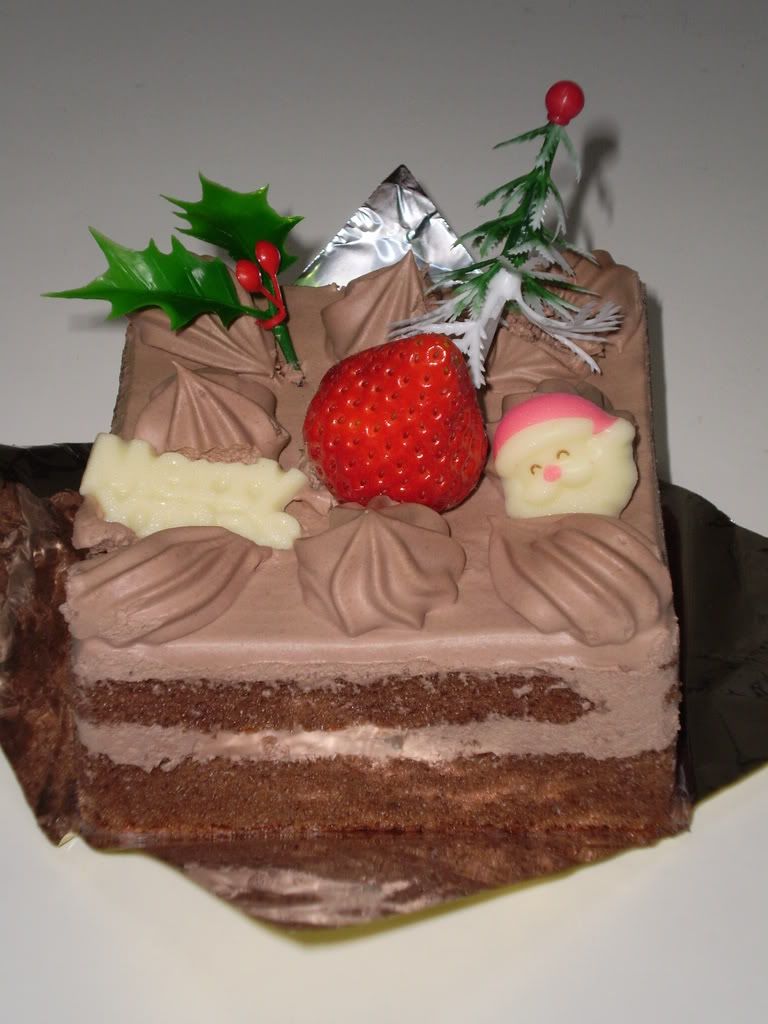
. . . followed by chocolate cake (cake is actually traditional Christmas fare in Japan).

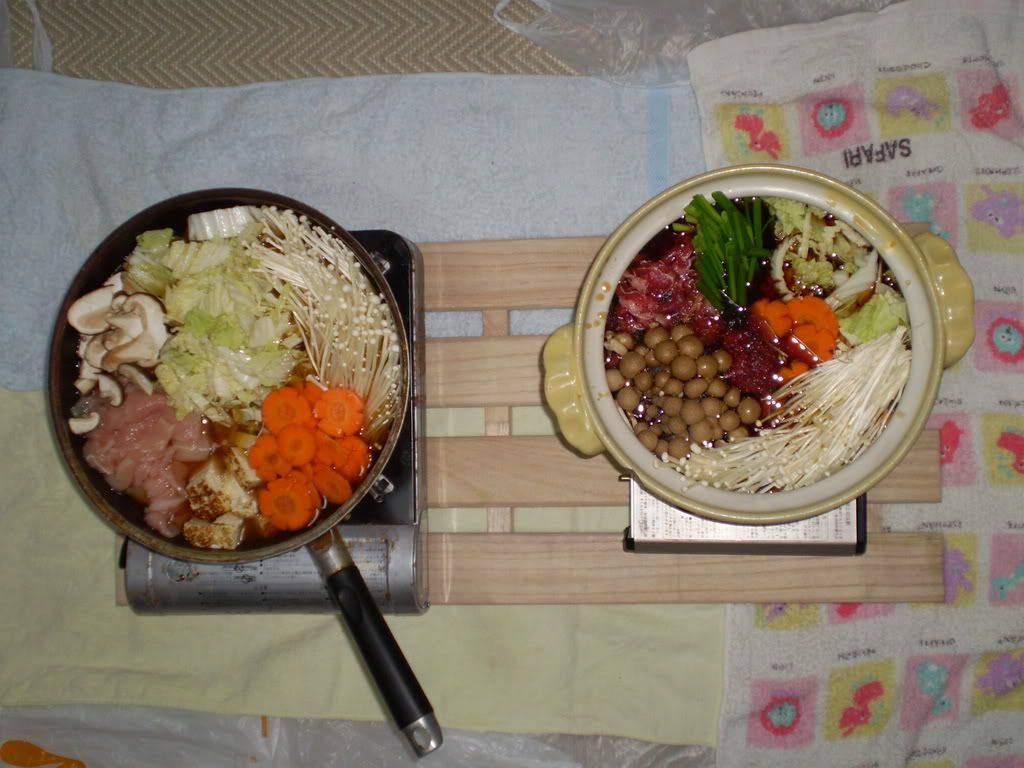
The following Sunday, we went to a nabe feast at the apartment of a fellow JET, Goran, in Myodani. Nabe may be described as a broth, kept bubbling in a special ceramic or cast-iron pot over a small burner, to which may be continously added all sorts of meat and vegetables. Everyone sits around the pot, refilling their bowls and adding more ingredients to the broth as necessary, inculcating a feeling of "community" and sharing--which, since all present were travelling together to Hiroshima later in the week, was most likely the point. As you imagine, the more ingredients that are added, the tastier the broth becomes. This is one Japanese tradition I can see us bringing back to Australia (depending on the availability of portable burners back home).
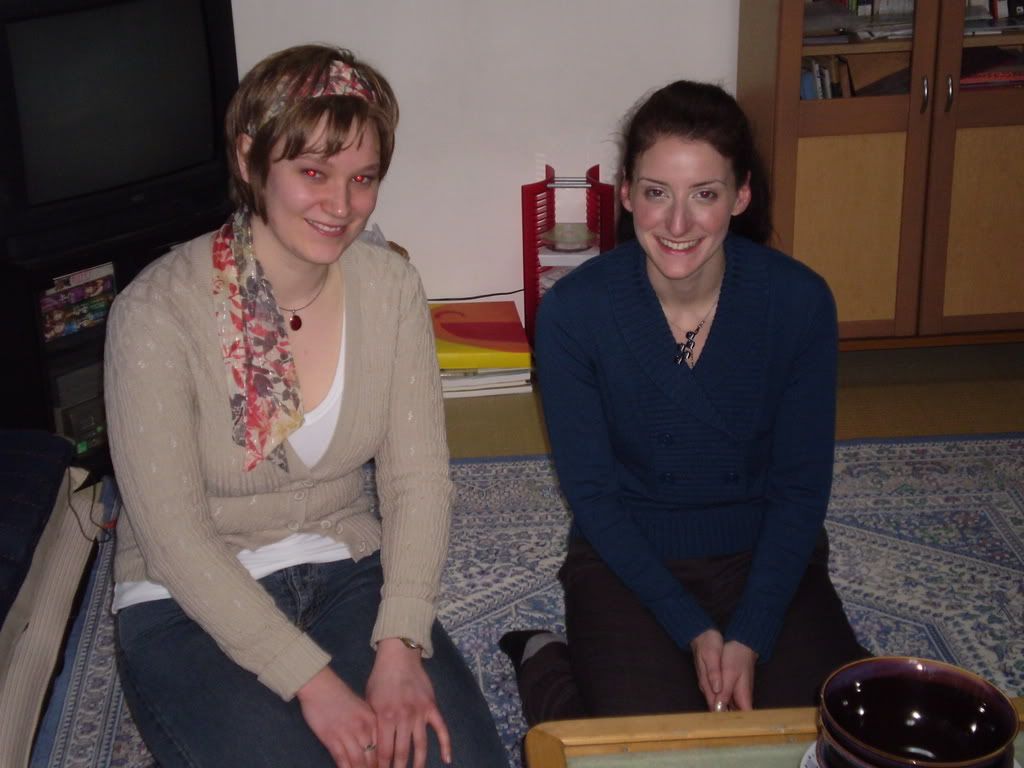
Amanda, a fellow JET from Perth, with Emma at the nabe feast

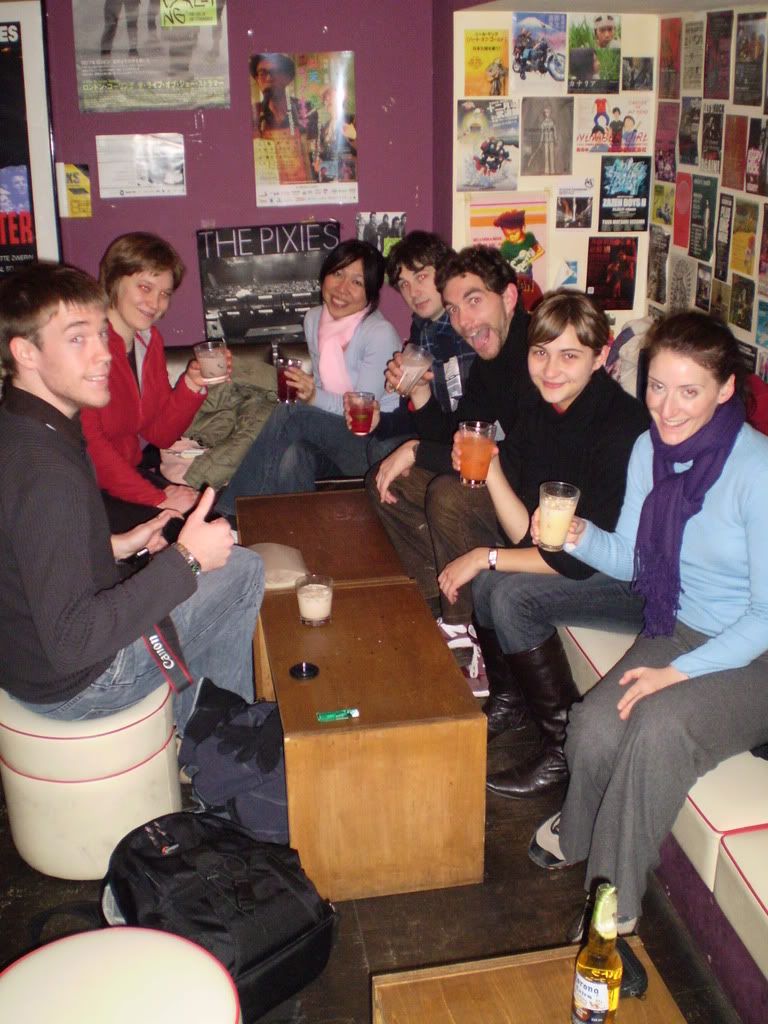
We had a great time on New Year's Eve, which kicked off at an izakaya in Sannomiya--a kind of restaurant best described as "only in Japan." After paying a set price of around $30 a head, we sat around a long, low table, at either end of which was located a digital menu with a touchscreen. From this menu we were free to order--within a time limit of 90 minutes--as much finger-food and alcohol as we could stomach. It was, needless to say, a rowdy affair, and put most of us in the mood for karaoke afterwards. (Click on the image below for a slideshow)Most Japanese spend New Year's Eve quietly with their families, only to congregate around local shrines close to midnight to see in the new year. Emma and I were unfortunate to miss this spectacle, because we had to be up early the following day to rendezvous with others journeying to Hiroshima, and there were no trains running back to Tarumi after midnight.